



How to improve the performance of fire resistant conveyor belts
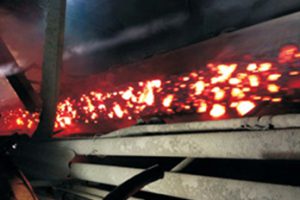
The fire-resistant conveyor belt usually consists of working surface covering rubber, non-working surface covering rubber and belt fabric ply. The working surface covering rubber is made of halogenated butyl rubber, ethylene-propylene rubber, styrene...
The most comprehensive method to correct the misalignment of EP conveyor belt
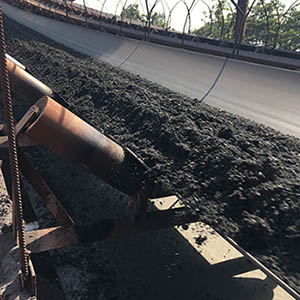
The main forces that the conveyor belt receives when running are: traction, the gravity of the material and the belt, the supporting force of the rollers and the friction resistance. When the conveyor is operating normally, these forces prevent the E...
Rubber conveyor belt Cold Splicing vs Hot Vulcanizing Splicing-SUNGDA Conveyor Belt
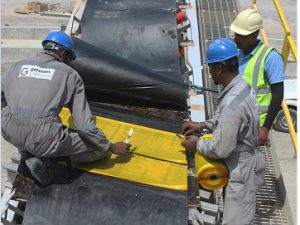
In today’s splicing work for rubber conveyor belts, it seems that more and more belts are being transformed into thermal vulcanization. Engineers / end users claim that hot vulcanization belts are far superior to cold vulcanization belts, but ...
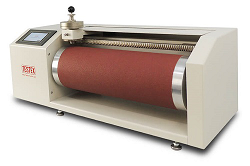
What standards does the EP conveyor belt abrasion rate follow?
For EP rubber conveyor belts, generally comply with DIN53516 standard. DIN 53516 for wear abrasion is to test sample mass loss by rubbing on abrasive paper under certain pressure. Calculate the volume loss(mm3) by sample density and the loss of stand...
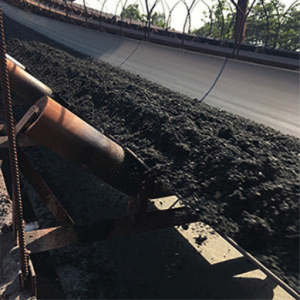
How to avoid “side-travel” problem of EP conveyor belt?
The conveyor structure must be “True” (relative to the center-line) and “Level” (side-to-side). All pulleys, snub rollers, carrying and return idlers must be “Square” with the frame (perpendicular to the belt center-line) and parallel to each other....
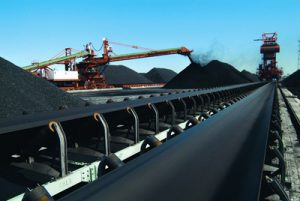
What affects the service life of EP conveyor belts?
The EP conveyor belt is one of the most important transportation equipment in the mining industry. Large mining companies have large transportation systems, long transportation distances, and long operating hours. Reasonably determining and trying to...
How to Choose the Cover Thickness of Conveyor Belt?–SUNGDA Conveyor Belt
There are many factors that influence top and bottom belt cover thickness: 1. Top cover selected for wear life (abrasion, gouging; temperature environment) based on rock properties, chute design that defines impact and shear, and product temp...

You should know these details before selecting EP conveyor belt type
1. When the twist coefficient of the material is increased, that is, the twist is increased. Like a steel wire wound into a spiral spring, the more turns, the lower the modulus, and the better the fatigue resistance. For EP fabric(EP ), increasing th...

How to extend the life of the EP conveyor to 3 years
Conveyors are used in all walks of life due to their advantages of smooth operation and continuous transportation capacity. In recent years, due to the gradual increase in the production capacity of major mines, the transportation capacity of conveyo...
7 reasons and solutions for EP conveyor belt slipping
Slipping is one of the common failures of belt conveyors. Once a slipping failure occurs, it is easy to cause the material to fall, block the feeding tube, wear the belt, and break the belt, which will cause the belt conveyor to fail to operate norm...