



-
Product Categories
-
Featured Products
-
What is the adhesion strength of a conveyor belt?-SUNGDA
1. What Is Adhesion Strength in a Rubber Conveyor Belt?
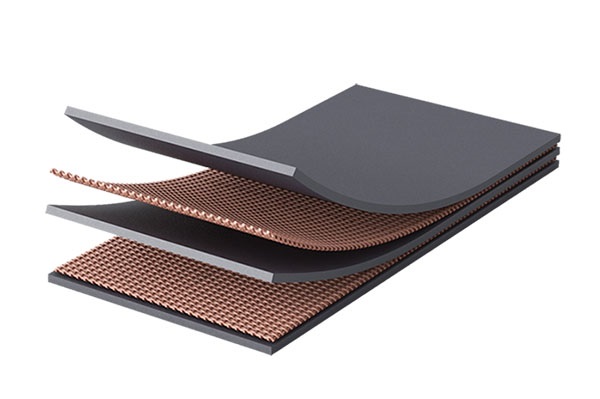
Adhesion strength is one of the most important quality indicators of a rubber conveyor belt. It refers to the bonding force between different layers and materials within the belt structure, including the rubber cover, fabric reinforcement, fabric plies and steel cords.
A conveyor belt is not simply a piece of rubber with a reinforcing material inside. It is a composite structure in which different materials must remain firmly bonded together throughout continuous operation.
During operation, conveyor belts are exposed to repeated bending, tensile stress, impact loading, abrasion, temperature changes and environmental influences. If the adhesion between different layers is insufficient, the belt may experience delamination, cover separation, ply separation or steel cord pull-out.
These failures can significantly shorten belt service life and increase maintenance costs and unplanned downtime.
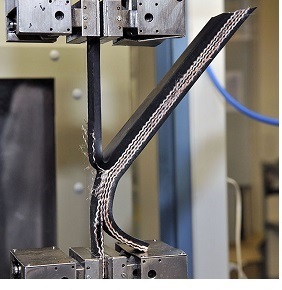
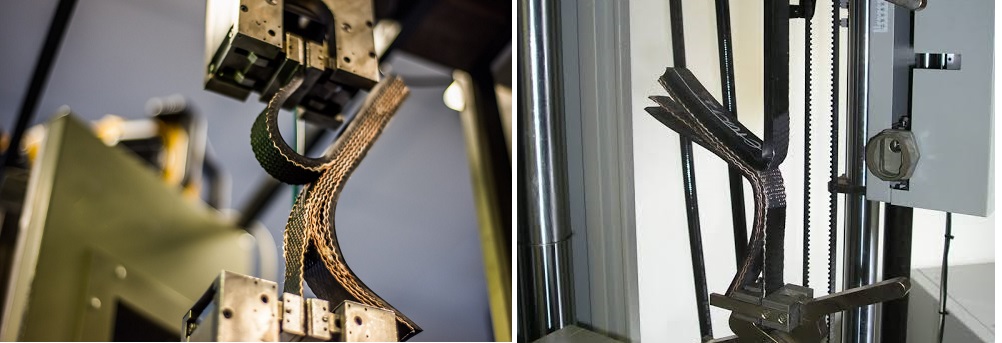
Adhesion strength is generally expressed in N/mm, representing the force required to separate bonded materials per unit width under specified test conditions.
It is important to distinguish adhesion strength from tensile strength:
- Tensile strength measures the belt’s resistance to being pulled apart.
- Adhesion strength measures the bonding strength between individual structural components.
A conveyor belt may have high tensile strength but still suffer premature failure if its interlayer adhesion is inadequate.
2. Why Is Adhesion Strength So Important?
Adhesion strength directly affects the structural integrity and operational reliability of a conveyor belt. Its importance can be understood through four aspects.
1. Preventing delamination
For EP conveyor belts, insufficient cover-to-ply adhesion can cause the rubber cover to separate from the fabric carcass. Once separation begins, moisture, dust and other contaminants may enter the interface, accelerating further deterioration.
2. Maintaining structural integrity
Ply-to-ply adhesion ensures that multiple reinforcement layers work together as a single structure. Poor bonding can cause internal separation under repeated tensile and bending loads, particularly in long-distance and heavy-duty conveyor systems.
3. Protecting steel cord reinforcement
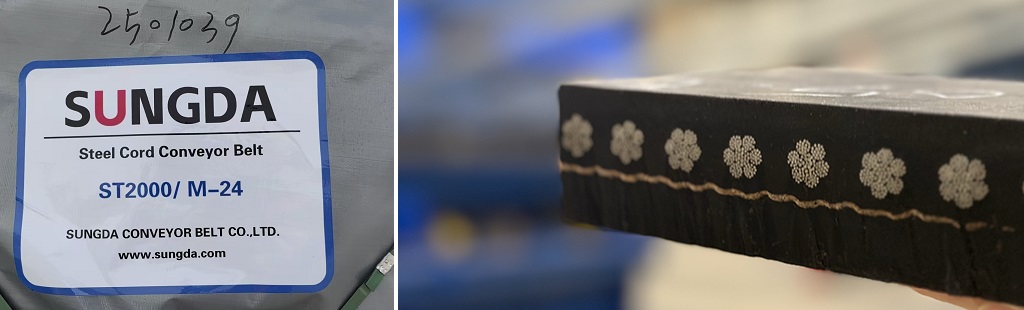
In steel cord conveyor belts, the bonding between rubber and steel cords is particularly important. Strong adhesion protects the cords from moisture penetration and corrosion while ensuring effective load transfer between the rubber matrix and steel reinforcement.
4. Extending service life and reducing maintenance costs
High adhesion strength reduces the risk of premature structural failure, unplanned shutdowns and costly belt replacement. It is especially important in mining, cement, steel, ports and other industries where conveyor systems operate continuously under demanding conditions.
3. Main Types of Adhesion Strength Tests
Different conveyor belt constructions require different adhesion tests.
| Test item | EP fabric conveyor belt | Steel cord conveyor belt |
|---|---|---|
| Cover to ply | Rubber cover to fabric carcass | Rubber cover to steel cord core |
| Ply to ply | Adhesion between adjacent fabric layers | Not applicable to conventional steel cord construction |
| Main purpose | Prevent cover separation and internal delamination | Prevent rubber-to-cord separation and protect steel cords |
For EP belts, two measurements are particularly important:
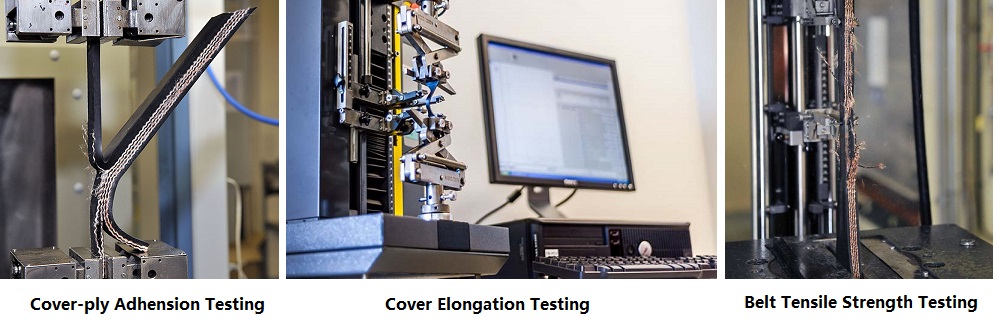
- Cover-to-ply adhesion: Measures the bonding strength between the top or bottom rubber cover and the fabric reinforcement.
- Ply-to-ply adhesion: Measures the bonding strength between adjacent fabric layers.
For steel cord belts, the key measurement is cover-to-steel-cord adhesion, which evaluates the bonding between the rubber and the steel cord reinforcement.
An important distinction is that ISO 252:2023 specifically excludes steel cord conveyor belts. Therefore, it should not be used as the test method for steel cord adhesion.
4. International Standards and Adhesion Strength Requirements
Different international standards establish different technical requirements. Buyers should pay particular attention to the actual adhesion values rather than assuming that all standards use the same acceptance criteria.
4.1 DIN 22102 – German Standard for Textile Conveyor Belts
DIN 22102 is widely referenced in the European conveyor belt market, particularly for textile-reinforced conveyor belts.
For common EP conveyor belts, the adhesion requirements are generally presented as follows:
| Test item | Cover thickness | Minimum adhesion |
|---|---|---|
| Cover to ply | ≤ 1.5 mm | 3.5 N/mm |
| Cover to ply | > 1.5 mm | 4.5 N/mm |
| Ply to ply | — | 5.0 N/mm |
These values are commonly published for DIN 22102 belt specifications covering rubber grades W, X, Y and Z.
The distinction in cover thickness is important: thicker covers require a higher minimum bonding strength.
DIN also provides a tolerance principle: individual test results should not fall more than 1 N/mm below the specified minimum values.
4.2 RMA – Rubber Manufacturers Association
RMA specifications are widely referenced in North American conveyor belt applications.
The commonly quoted adhesion requirements for general-purpose fabric conveyor belts are:
| Test item | Cover thickness | Minimum adhesion |
|---|---|---|
| Cover to ply | ≤ 1.6 mm | 3.0 N/mm |
| Cover to ply | > 1.6 mm | 4.4 N/mm |
| Ply to ply | — | 4.0 N/mm |
RMA Grade I and Grade II mainly distinguish the physical properties of the rubber cover, such as tensile strength and abrasion resistance. They should not be confused with different reinforcement constructions.
The adhesion figures above are commonly published RMA specification values; the applicable RMA edition and contractual test requirements should be confirmed before using them as acceptance criteria.
For a steel cord conveyor belt using 5 mm diameter steel cords:
| Test condition | Calculation | Minimum force |
|---|---|---|
| As delivered | 15 × 5 + 15 | 90 N/mm |
| After thermal treatment | 15 × 5 + 5 | 80 N/mm |
This requirement evaluates the bonding performance of the rubber surrounding the steel cords, including its resistance to thermal deterioration.
It is important not to confuse this measurement with the tensile strength of the steel cords themselves. They evaluate different mechanical properties.
5. Comparison of International Adhesion Requirements
The following table summarizes commonly referenced values for EP and steel cord conveyor belts.
| Standard | Adhesion test | Minimum requirement |
|---|---|---|
| DIN 22102 | Cover to ply, ≤1.5 mm | 3.5 N/mm |
| DIN 22102 | Cover to ply, >1.5 mm | 4.5 N/mm |
| DIN 22102 | Ply to ply | 5.0 N/mm |
| RMA | Cover to ply, ≤1.6 mm | 3.0 N/mm |
| RMA | Cover to ply, >1.6 mm | 4.4 N/mm |
| RMA | Ply to ply | 4.0 N/mm |
| ISO 15236-1 | Steel cord pull-out, as delivered | 15d + 15 N/mm |
| ISO 15236-1 | Steel cord pull-out, after heating | 15d + 5 N/mm |
Note: DIN and RMA figures are commonly quoted product-specification values. Steel cord values are diameter-dependent. These are not interchangeable test methods or universally applicable requirements. Always verify the relevant standard edition, belt construction and purchase specification.
6. What Factors Affect Conveyor Belt Adhesion Strength?
Achieving high adhesion strength requires careful control of raw materials and manufacturing processes.
1. Rubber compound formulation
The rubber compound must have suitable bonding characteristics, elasticity and resistance to ageing. Natural rubber, SBR and other synthetic rubber formulations may be combined according to the application.
An unsuitable formulation can result in insufficient bonding even when the rubber cover meets its tensile strength and abrasion requirements.
2. Fabric treatment and bonding compatibility
For EP conveyor belts, the bonding performance between rubber and fabric depends on fabric surface treatment, adhesion systems and compatibility between the rubber compound and reinforcement material.
3. Steel cord surface treatment
For steel cord belts, the steel surface and its brass coating play an important role in rubber-to-cord bonding. Proper brass-to-rubber interaction is essential for achieving reliable adhesion.
4. Vulcanization temperature, pressure and time
Vulcanization is one of the most critical manufacturing stages. Insufficient curing may result in incomplete cross-linking and weak bonding, while inappropriate curing conditions can negatively affect rubber properties and adhesion performance.
5. Manufacturing consistency
Even if the average adhesion result meets the specification, significant variation between samples may indicate unstable manufacturing conditions. Manufacturers should monitor adhesion performance through regular quality inspections.
7. Adhesion Strength Requirements for Conveyor Belt Splicing
Adhesion strength is not only important for the original conveyor belt. It is equally important when connecting two belt sections.
A conveyor belt splice is often a critical point in the entire conveying system because it must transfer tensile loads between the two belt ends.
For EP conveyor belts, hot vulcanized splicing generally involves preparing stepped fabric layers, applying bonding materials and vulcanizing the joint under controlled conditions.
For steel cord conveyor belts, the splice requires carefully arranged steel cords, appropriate rubber compounds and controlled vulcanization.
Several factors must be considered:
| Key factor | Technical consideration |
|---|---|
| Surface preparation | Remove contamination, moisture and deteriorated rubber from bonding surfaces |
| Step length | Follow the approved splice design for the belt strength and construction |
| Bonding materials | Use compatible uncured rubber and bonding materials |
| Alignment | Maintain correct fabric and steel cord positioning |
| Temperature | Follow the specified vulcanization temperature |
| Pressure | Ensure uniform pressure throughout the splice |
| Curing time | Adjust according to belt thickness, compound and vulcanization conditions |
| Inspection | Check for voids, incomplete bonding and other visible defects |
An important consideration is that factory adhesion strength and splice strength are not the same thing.
A conveyor belt may achieve excellent cover-to-ply and ply-to-ply adhesion in laboratory testing, but its splice can still fail if the joint preparation or vulcanization process is inadequate.
Therefore, splice quality should be evaluated separately, considering splice design, joint efficiency, workmanship and the applicable acceptance requirements.
For long-distance steel cord conveyor systems, the consequences of splice failure can be particularly serious. Proper splice design and quality control are essential.
8. How Should Buyers Evaluate Adhesion Strength When Purchasing Conveyor Belts?
When purchasing EP or steel cord conveyor belts, buyers should not simply request a statement that the product complies with DIN or RMA standards.
A more effective approach is to include specific adhesion requirements in the technical specification.
We recommend checking the following:
- For EP belts: Request separate test results for top cover-to-ply, bottom cover-to-ply and ply-to-ply adhesion.
- For steel cord belts: Request cord pull-out test results and confirm both as-delivered and post-thermal-treatment performance where ISO 15236-1 applies.
- Check test methods: Ensure that the manufacturer uses the appropriate ISO test method for the belt construction.
- Review individual results: Do not rely exclusively on average values. Check the minimum individual results and test variation.
- Request traceable test reports: Reports should identify the belt specification, sample location, test method, test conditions and actual measured values.
- Evaluate splice quality separately: Confirm the splice design and acceptance criteria rather than assuming that factory adhesion results guarantee joint performance.
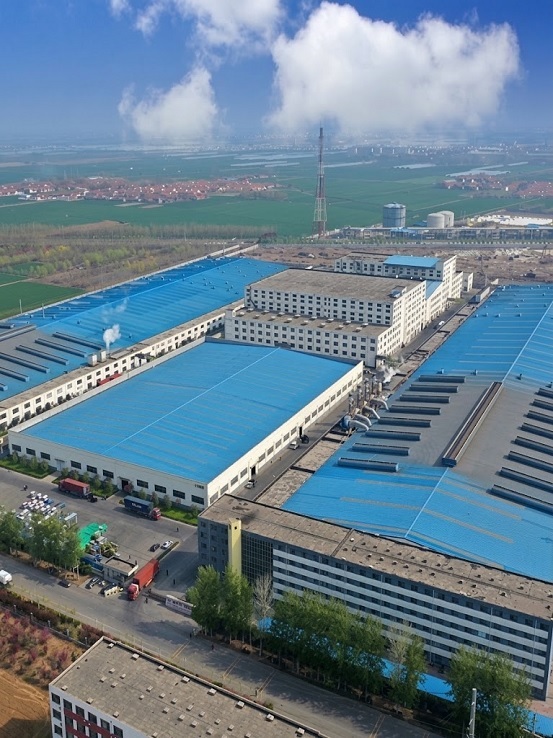
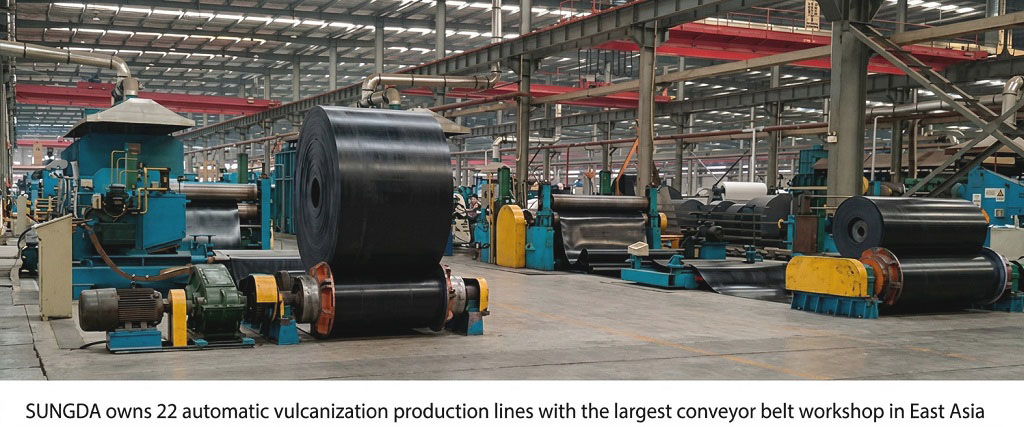
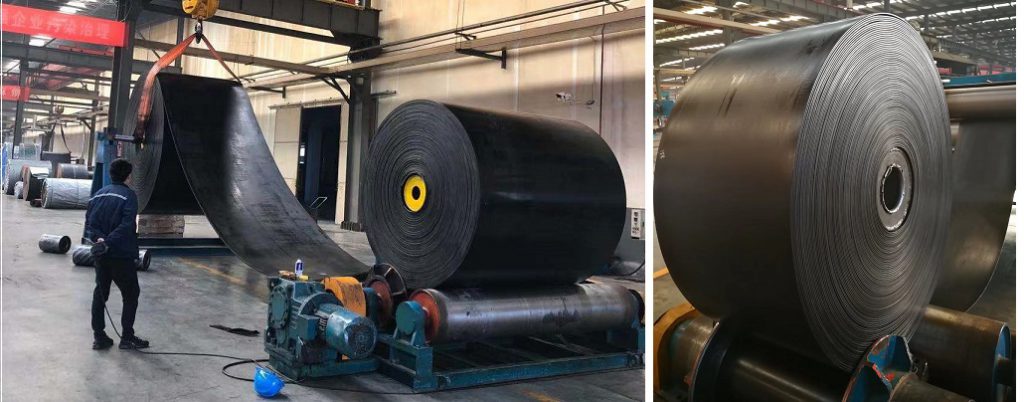
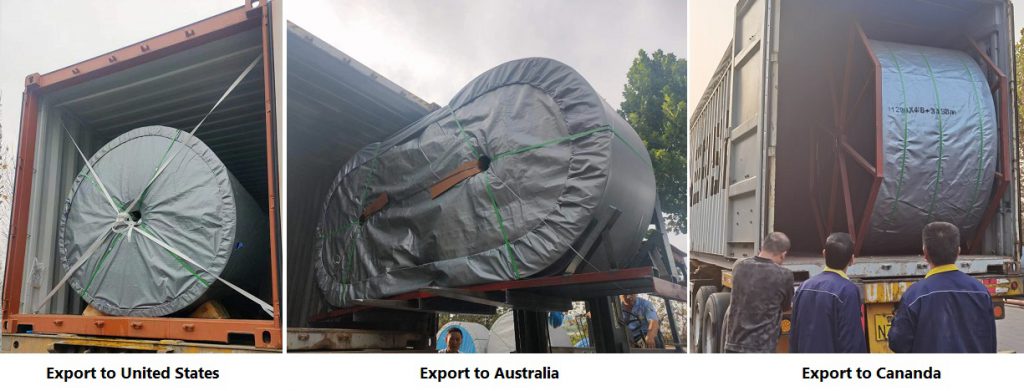
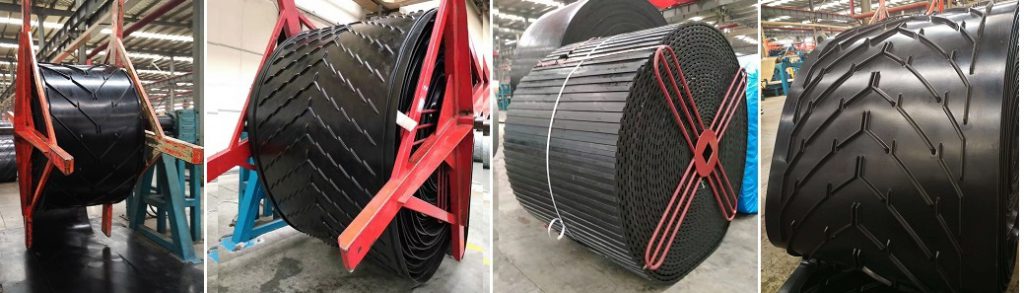
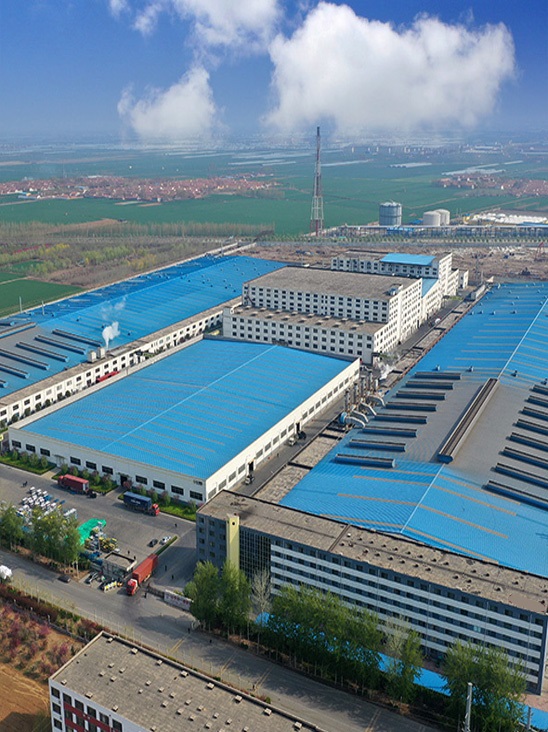
SUNGDA Conveyor Belt Vulcanization Workshops
Tags: Adhesion Strength,Comparison of heat resistance conveyor belts with other types,conveyor belt splicing,DIN 22102,DIN-K,DIN-W,DIN-X,DIN-Y,DIN-Z,EP conveyor belt,Ep conveyor belt specification,RMA-I,RMA-II,Rubber conveyor belt,Steel cord conveyor belt
Related Products
-
EP Conveyor Belt EP400/3,EP500/4,EP630/4,EP800/4-SUNGDA GROUP
No. -

DIN-X,DIN-W,DIN-Y and DIN-Z Rubber Conveyor Belt –SUNGDA
No. -

How to Convert PIW Conveyor belt to EP Belt?
No. -
7 Common Causes of Conveyor Belt Tearing and What are the Preventive Measures?
No. -
The Top 5 Rubber Conveyor Belt Manufactures in China 2026(with website & contact info)
No. -

What is the PIW of the Belt and How Can It be Converted into EP Belt?
No. -

RMA-I & RMA-II Rubber Conveyor Belts–SUNGDA
No. -
How to Choose Right EP Conveyor Belt –SUNGDA Group
No. -
Steel Cord Conveyor Belt
No. -
EP Rubber Conveyor Belt
No.