



-
Product Categories
-
Featured Products
-
How to Choose the Right Oil-resistant Conveyor Belt?
1. Applications of Oil Resistant Conveyor Belts
Oil resistant conveyor belts are specially designed to transport materials containing oils, fats, grease and petroleum-based substances without excessive rubber swelling, softening or deterioration.
They are widely used in the following industries:
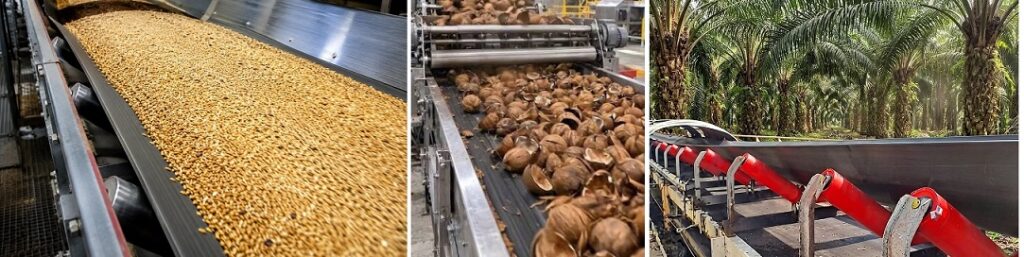
- Food and Agricultural Processing: Transportation of soybean meal, palm kernel cake, coconut processing, rapeseed, sunflower seeds and other oily agricultural products.
- Automotive and Mechanical Manufacturing: Handling of oily metal components, machining chips, stamping parts and materials contaminated with cutting fluids or lubricants.
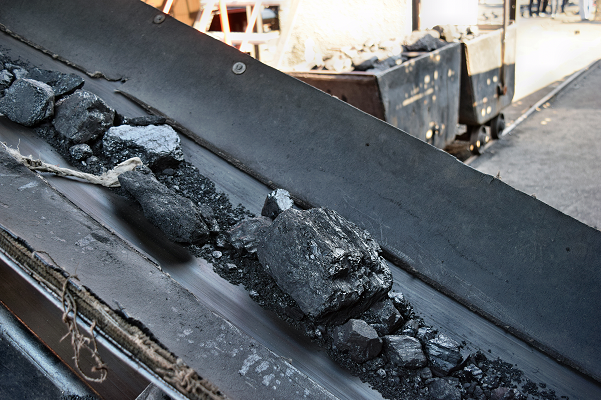
- Mining and Mineral Processing: Transportation of coal and minerals contaminated with oil, grease or processing chemicals.
- Petrochemical Industry: Handling of petroleum-related materials, oil-contaminated products and industrial residues.
- Recycling and Waste Treatment: Transportation of oily scrap metal, used automotive components and industrial waste.
Ordinary rubber conveyor belts may absorb oil during operation, resulting in swelling, reduced hardness, loss of tensile strength and premature cover deterioration. Therefore, selecting an appropriate rubber compound is essential for maintaining conveyor belt performance and service life.
2. Rubber Materials Used in Oil Resistant Conveyor Belts
Nitrile Butadiene Rubber (NBR) is one of the most widely used materials for oil resistant conveyor belt covers. Its oil resistance mainly depends on its acrylonitrile (ACN) content.
Higher ACN content generally improves resistance to petroleum-based oils, although it may reduce low-temperature flexibility.
| Rubber Type | Main Characteristics | Typical Applications |
|---|---|---|
| NBR | Good oil resistance and mechanical properties | Standard oil resistant belts |
| NBR/PVC | Improved resistance to selected oils | More demanding oil exposure |
| HNBR | Better heat and ageing resistance | High-temperature oil applications |
| FKM | Excellent resistance to many oils and chemicals | Specialized industrial applications |
| CR | Moderate oil resistance and good weather resistance | General industrial applications |
NBR is generally the preferred choice for conventional oil resistant conveyor belts. NBR/PVC blends may further improve resistance to certain oils, while HNBR and FKM are considered for more demanding applications.
The final rubber formulation also includes carbon black, vulcanizing agents, accelerators, antioxidants and suitable processing additives. These ingredients influence tensile strength, abrasion resistance, hardness and ageing performance.
Natural rubber (NR) and SBR should not be used as the principal elastomers when high resistance to petroleum-based oils is required.
3. Conveyor Belt Construction and Adhesion
Oil resistance should not be evaluated based on the cover rubber alone. A conveyor belt consists of top cover rubber, fabric reinforcement, inter-ply bonding rubber and bottom cover rubber.
Common reinforcement materials include:
- EP: Polyester/nylon fabric, offering good dimensional stability and relatively low elongation.
- NN: Nylon/nylon fabric, providing good flexibility and impact resistance.
- Cotton: Traditional reinforcement used in some specialized applications.
The bonding rubber between fabric plies is equally important. If the cover rubber resists oil but the bonding compound does not, prolonged oil exposure may weaken interlayer adhesion and cause delamination.
Therefore, manufacturers should evaluate the oil resistance of the cover compounds and the adhesion performance of the complete belt construction.
4. International Standards for Oil Resistant Conveyor Belts
Several international standards are used to evaluate conveyor belt construction, rubber properties and oil resistance.
| Standard | Testing Scope |
|---|---|
| ISO 14890 | General requirements for textile conveyor belts |
| ISO 10247 | Conveyor belt cover classification |
| ISO 1817 | Resistance of rubber to liquids |
| ISO 37 | Rubber tensile strength and elongation |
| ISO 4649 | Rubber abrasion resistance |
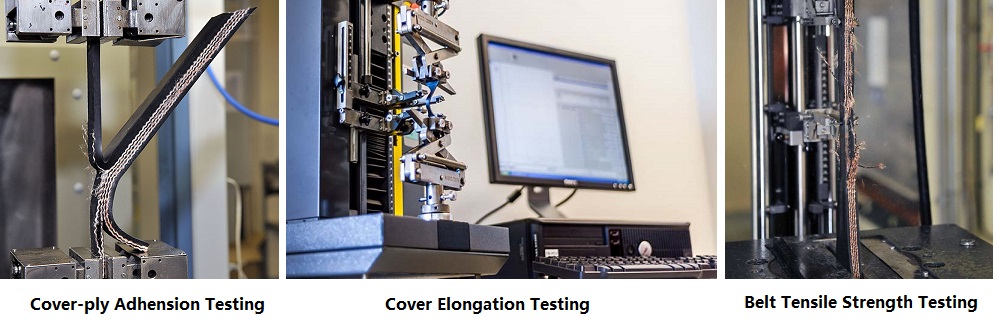
| ISO 252 | Adhesion between conveyor belt components |
| ISO 868 | Shore A hardness testing |
| ISO 188 | Heat ageing of rubber |
| ISO 283 | Full-thickness tensile testing of textile conveyor belts |
| ISO 703 | Conveyor belt troughability |
ISO 1817 is particularly important for evaluating oil resistance, while ISO 14890 covers general textile conveyor belt requirements.
ISO 10247 relates to cover classification and should not be interpreted as a universal oil immersion acceptance specification.
The applicable standard editions and requirements should always be confirmed when preparing technical agreements.
5. Oil Resistance Testing and Laboratory Results
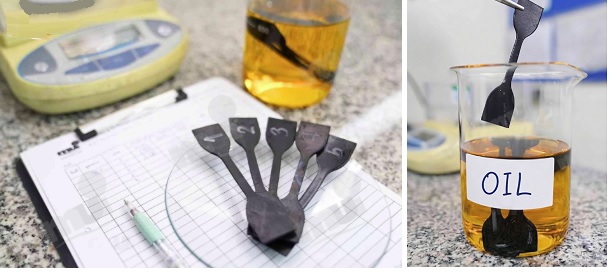
ISO 1817 is the main reference method for evaluating the effect of liquids on rubber.
Common reference oils include IRM 901, IRM 902 and IRM 903. These oils provide standardized conditions for comparing rubber compounds, but they cannot represent every industrial oil, fuel or chemical.
The main evaluation parameters include:
Volume Change
ΔV (%) = (V1 − V0) / V0 × 100
Mass Change
Δm (%) = (m1 − m0) / m0 × 100
Tensile Strength Retention
Retention (%) = (T1 / T0) × 100
Where V0 and V1 are the original and post-immersion volumes, m0 and m1 are the original and post-immersion masses, and T0 and T1 are the original and post-immersion tensile strengths.
5.1 Oil Immersion Test Results
The following example uses an NBR cover rubber specimen immersed in IRM 903 at 100°C for 72 hours.
| Test Item | Standard | Example Test Result | Example Acceptance Criteria | Result |
|---|---|---|---|---|
| Volume Change | ISO 1817 | +12.5% | ≤ +20% | Pass |
| Mass Change | ISO 1817 | +9.8% | ≤ +15% | Pass |
| Tensile Strength Retention | ISO 1817 + ISO 37 | 88% | ≥ 80% | Pass |
| Elongation Retention | ISO 1817 + ISO 37 | 82% | ≥ 70% | Pass |
| Hardness Change | ISO 1817 + ISO 868 | -5 Shore A | Within ±10 Shore A | Pass |
| Surface Condition | Visual Inspection | No severe cracking or blistering | No severe deterioration | Pass |
These results indicate acceptable swelling resistance and mechanical property retention under the specified laboratory conditions.
5.2 Mechanical Performance Test Results
The following example illustrates the conventional mechanical performance of an EP1000/4 conveyor belt with 6 mm top cover and 2 mm bottom cover.
| Test Item | Standard | Example Test Result | Example Acceptance Criteria | Result |
|---|---|---|---|---|
| Full-thickness Tensile Strength | ISO 283 | 1,085 N/mm | ≥ 1,000 N/mm | Pass |
| Top Cover Tensile Strength | ISO 37 | 18.5 MPa | ≥ 14 MPa | Pass |
| Top Cover Elongation at Break | ISO 37 | 420% | ≥ 350% | Pass |
| Top Cover Hardness | ISO 868 | 65 Shore A | 60–70 Shore A | Pass |
| Abrasion Resistance | ISO 4649 | 105 mm³ | ≤ 150 mm³ | Pass |
| Cover-to-Carcass Adhesion | ISO 252 | 8.2 N/mm | ≥ 7 N/mm | Pass |
| Inter-ply Adhesion | ISO 252 | 6.5 N/mm | ≥ 5 N/mm | Pass |
Note: Both tables contain illustrative engineering data and example contractual acceptance limits, not actual factory test results or universal ISO requirements. Actual values must be verified through laboratory testing and agreed upon in the purchase specification.
6. How to Evaluate the Quality of an Oil Resistant Conveyor Belt
A reliable quality assessment should include three aspects:
1. Check Product Specifications
Verify belt strength, fabric type, number of plies, overall thickness, cover thickness and oil resistance classification.
2. Review Laboratory Test Reports
Request test results covering oil immersion, volume change, tensile strength, elongation, hardness, abrasion resistance and adhesion strength.
3. Consider Actual Operating Conditions
The selection of rubber compounds should consider the actual oil type, operating temperature, exposure duration and mechanical loading.
A belt suitable for vegetable oil may not necessarily perform well in diesel fuel or synthetic hydraulic oil. Therefore, actual service liquids should be considered when specifying laboratory tests.
7. Purchasing Recommendations
When purchasing oil resistant conveyor belts, international buyers should clearly specify:
- Required belt construction and tensile strength.
- Top and bottom cover thickness.
- Required oil resistance classification.
- Applicable test standard, such as ISO 1817.
- Test oil type and identification.
- Immersion temperature and duration.
- Maximum permitted volume change.
- Minimum tensile strength retention.
- Adhesion requirements after oil exposure, where applicable.
- Factory inspection and laboratory test reports.
Do not rely solely on descriptions such as MOR or SOR without supporting test data. The actual test conditions and acceptance limits should be included in the technical agreement.
8. Conclusion
Oil resistant conveyor belts are essential for transporting oily materials in food processing, automotive manufacturing, mining, petrochemical and recycling industries.
NBR is the most common rubber material for conventional oil resistant conveyor belt covers. However, the overall performance of a belt depends on its rubber formulation, fabric reinforcement, interlayer adhesion and operating environment.
ISO 1817 provides the key method for evaluating rubber resistance to liquids, while ISO 14890, ISO 252, ISO 283 and ISO 4649 cover important aspects of conveyor belt construction and mechanical performance.
A reliable oil resistant conveyor belt must demonstrate not only low oil swelling but also sufficient mechanical strength and stable adhesion under the specified operating conditions.
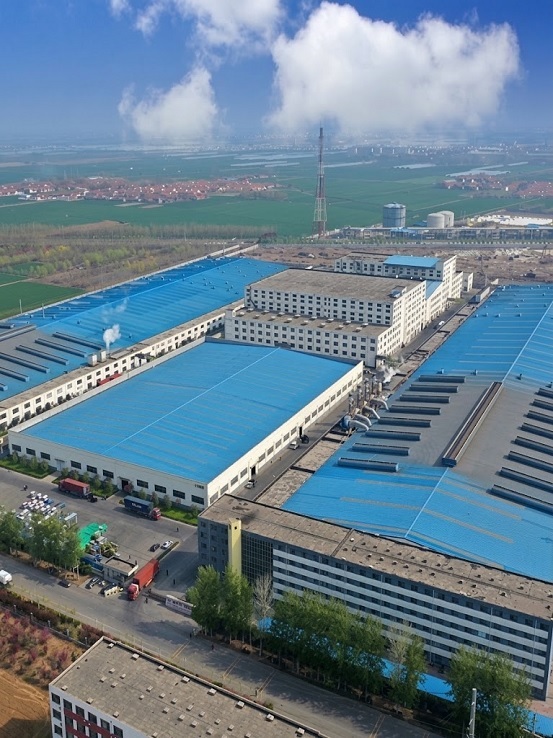
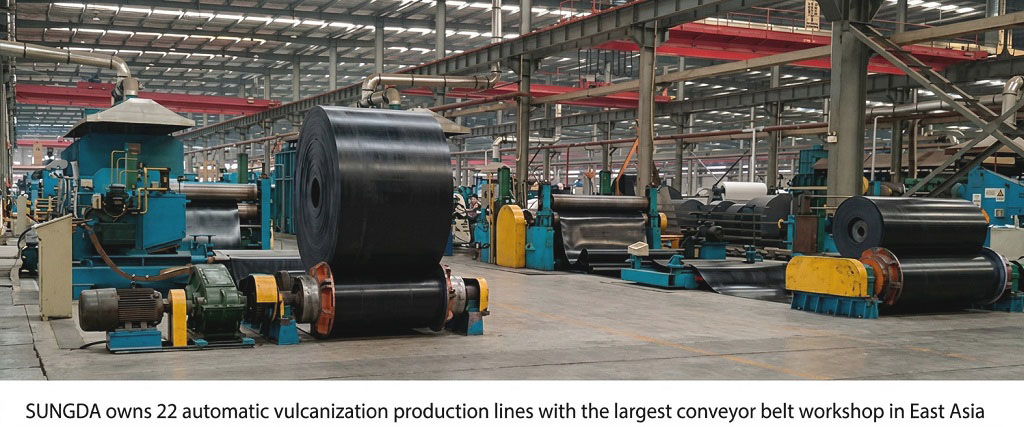
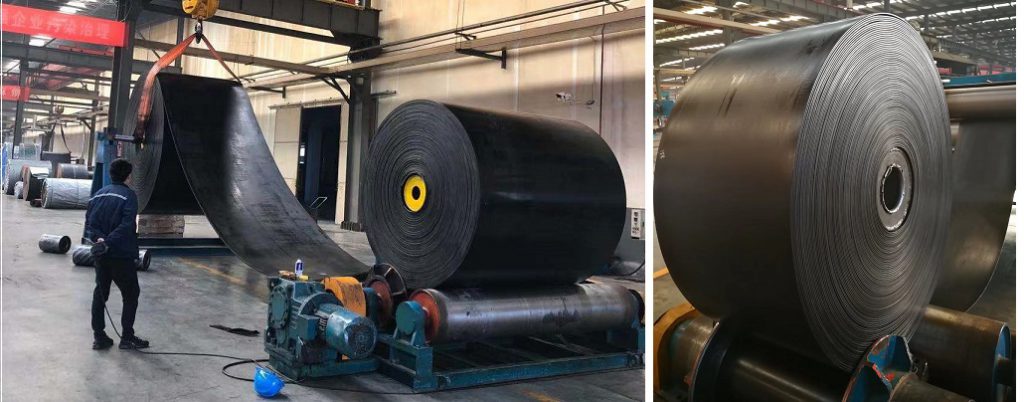
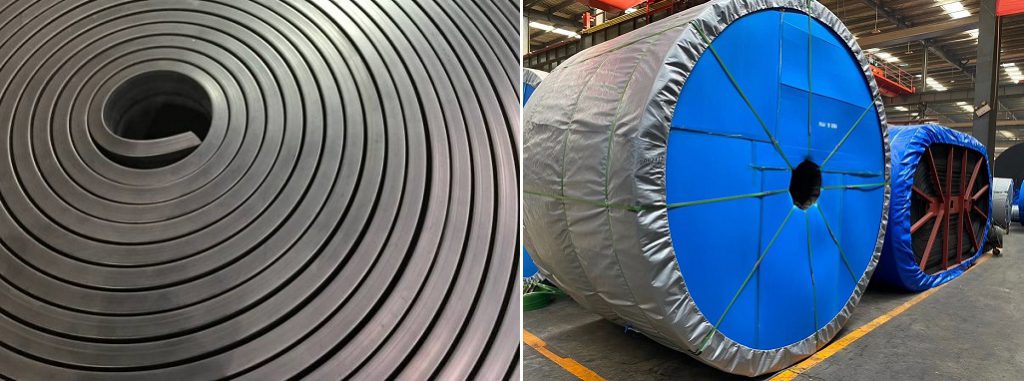
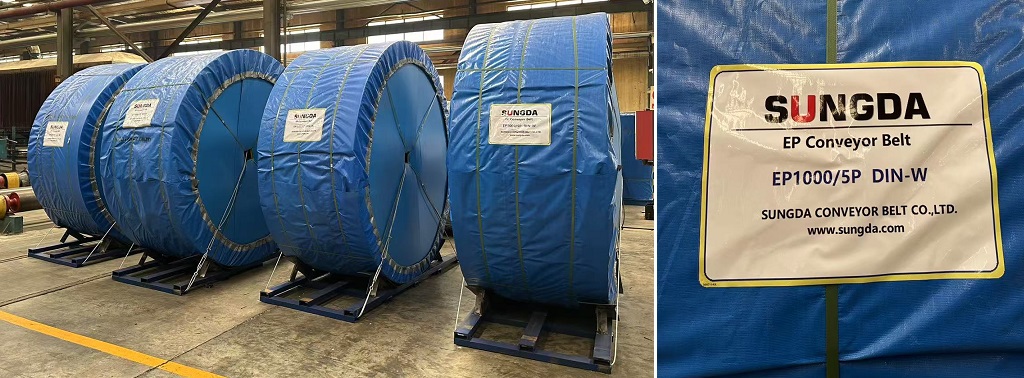
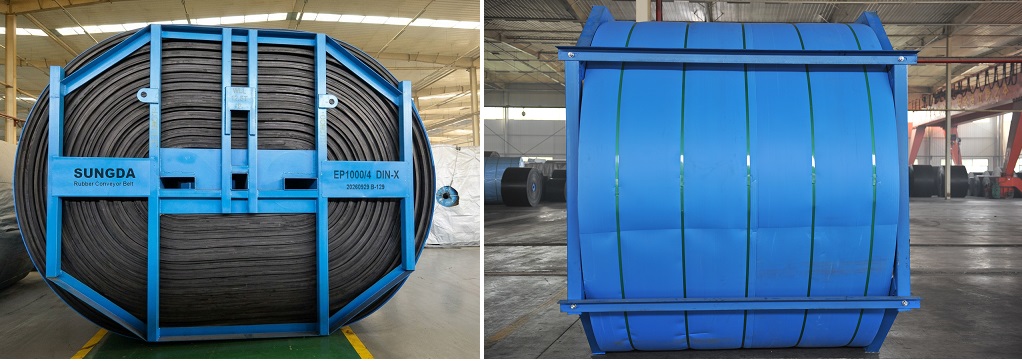
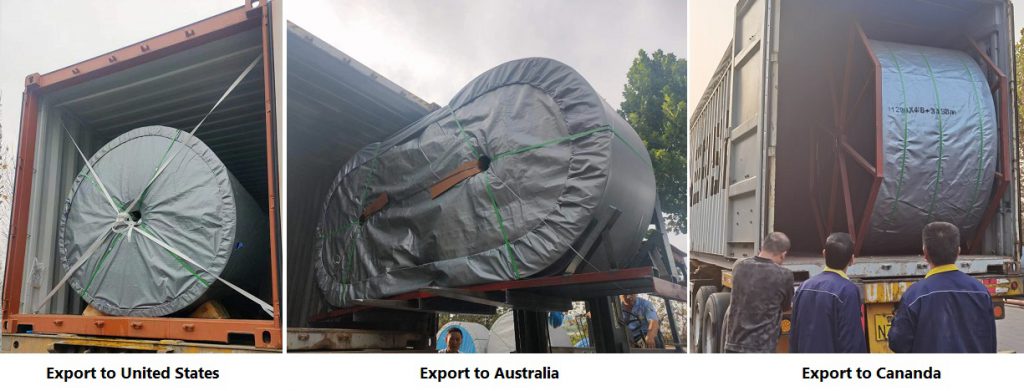
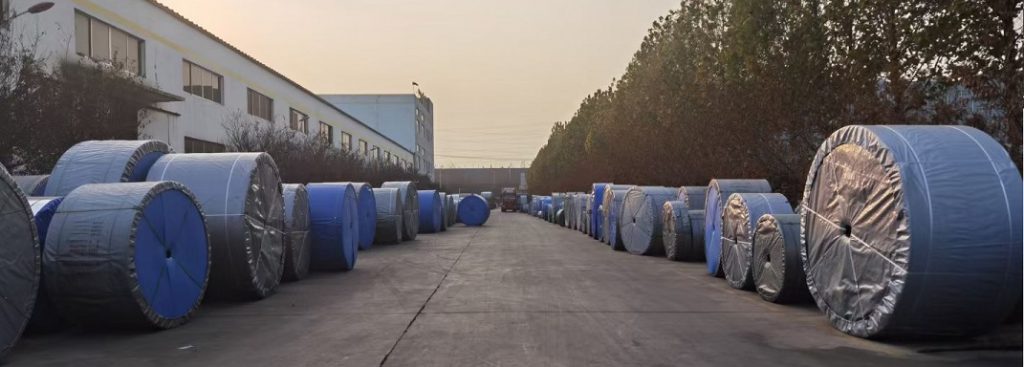
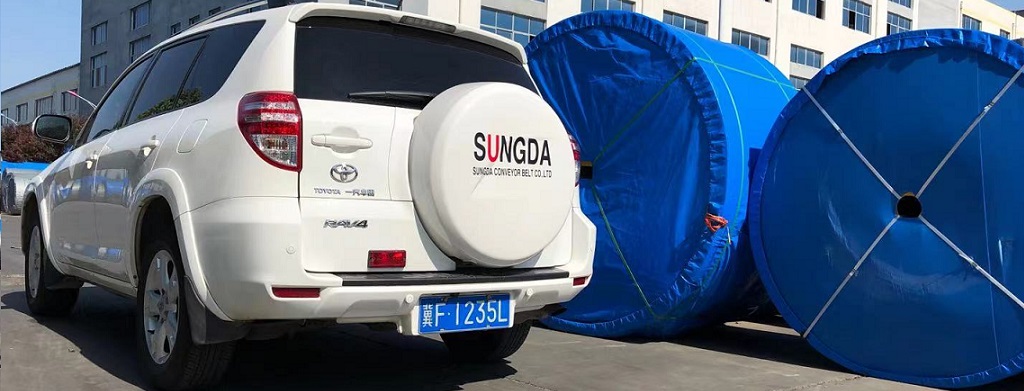
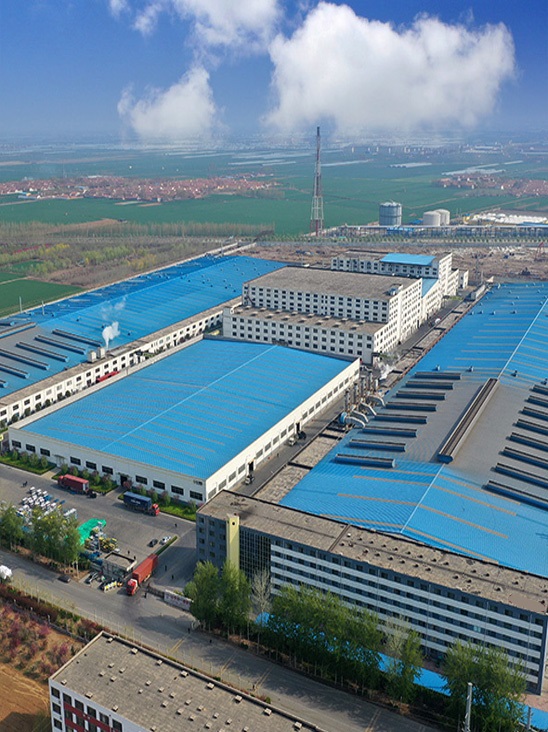
SUNGDA Conveyor Belt Vulcanization Workshop

Related Ep conveyor belt article:
- What are the advantages of EP conveyor belts compared to ordinary conveyors?
- How does the bending of EP fabric affect the working life of the conveyor belt?
- What is PIW in the EP conveyor belt and how to convert it into N/mm
- How to identify the quality of the EP conveyor belt in one minute?
Tags: coconut,EP conveyor belt,grease resistant conveyor belt,ISO 1817,NBR,oil resistant belt,palm kernel,Petrochemical,rapeseed,Recycling,Rubber conveyor belt,soybean,Waste Treatment
Related Products
-
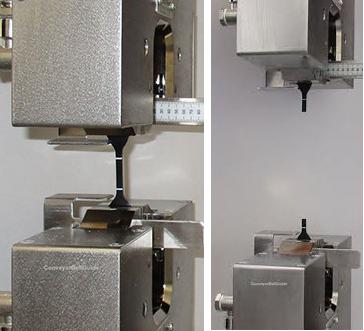
What Is Conveyor Belt Tensile Strength and Elongation at Break?
No. -

What Are AS, ASTM, and ISO Standards for Rubber Conveyor Belts?
No. -
How to Correctly Select EPDM, SBR, and NBR Rubbers for Conveyor Belts?
No. -
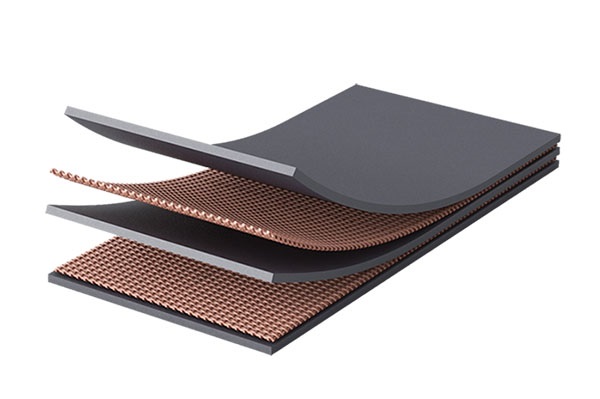
What is the adhesion strength of a conveyor belt?-SUNGDA
No. -

How to Convert PIW Conveyor belt to EP Belt?
No. -
7 Common Causes of Conveyor Belt Tearing and What are the Preventive Measures?
No. -
The Top 5 Rubber Conveyor Belt Manufactures in China 2026(with website & contact info)
No. -
How to Choose Right EP Conveyor Belt?
No. -
EP Rubber Conveyor Belt
No. -
Pipe (Tubular)Conveyor Belt
No.