



-
Product Categories
-
Featured Products
-
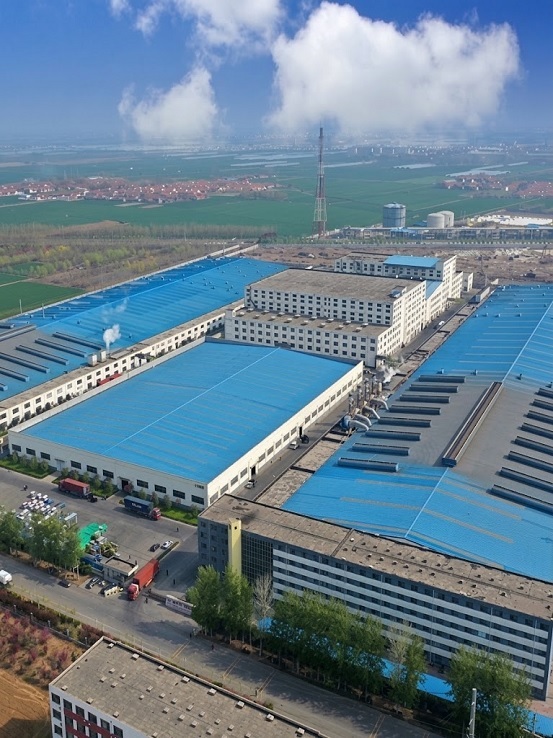
What Is Conveyor Belt Impact Resistance?
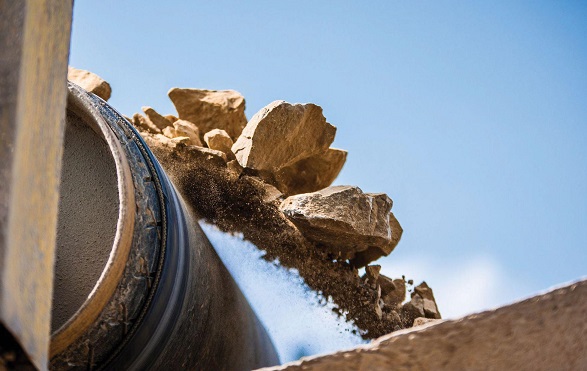
1. What Is Conveyor Belt Impact Resistance?
Impact resistance is the ability of a conveyor belt to withstand sudden mechanical forces caused by falling materials, heavy loads, or repeated impacts without suffering significant structural damage.
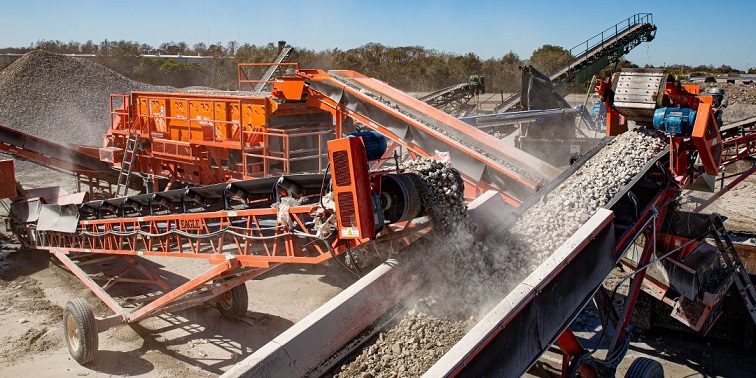
It is particularly important in mining, quarrying, steel plants, cement factories, ports, and other heavy-duty material handling applications.
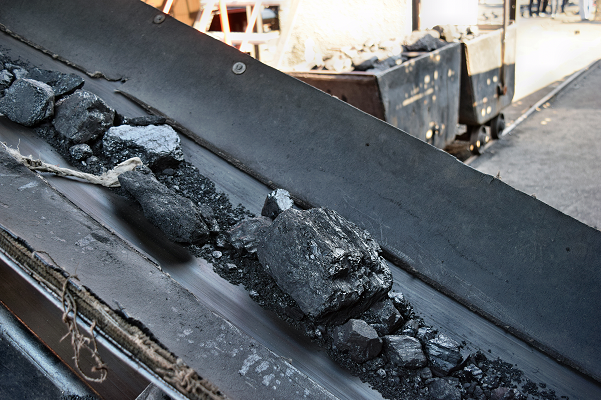
When large or heavy materials fall onto a moving conveyor belt, the impact energy is transferred to the rubber cover and carcass. If the belt cannot absorb and distribute this energy effectively, several types of damage may occur:
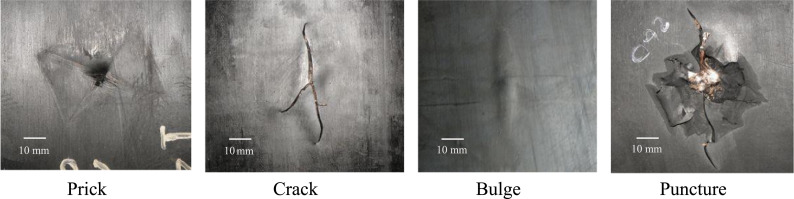
1.Cover Rubber Cracking: Cracks develop on the upper rubber cover due to repeated impact loading.
2. Puncture Damage: Sharp stones or metal objects penetrate the rubber cover.
3. Carcass Damage: EP fabric layers or steel cords may suffer internal damage.
4. Delamination: The rubber cover separates from the carcass due to excessive mechanical stress.
5. Longitudinal Tearing: Initial impact damage may develop into a longer tear during conveyor operation.
Impact resistance should not be confused with tensile strength, tear resistance, or abrasion resistance. These properties are related but evaluate different aspects of conveyor belt performance.
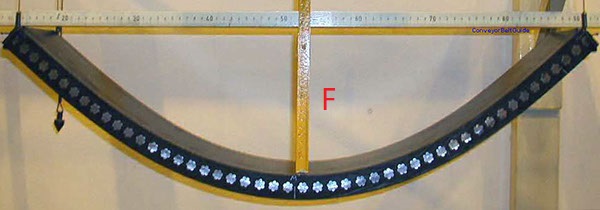
Damage caused to conveyor belts by objects of varying hardness and shape from different heights:
2. Main Factors Affecting Conveyor Belt Impact Resistance
The impact resistance of a conveyor belt depends on several factors, including rubber properties, cover thickness, carcass construction, and operating conditions.
2.1 Cover Rubber Thickness
The top cover is the first protective layer against falling materials. Sufficient cover thickness helps absorb impact energy and reduces the possibility of damage to the carcass.
For heavy-duty applications involving large rocks or ores, thicker top covers are generally recommended.
However, thickness alone does not determine impact resistance. Rubber formulation, elasticity, toughness, and dynamic performance must also be considered.
2.2 Rubber Elasticity and Toughness
The rubber compound plays a critical role in absorbing and distributing impact energy.
Important rubber properties include:
- Tensile Strength
- Elongation at Break
- Tear Strength
- Abrasion Resistance
- Elasticity and Dynamic Resilience
A rubber compound with good elasticity and toughness can deform under impact and recover without excessive cracking or permanent damage.
It is important to understand that higher tensile strength does not automatically mean better impact resistance. A balanced rubber formulation is necessary for demanding applications.
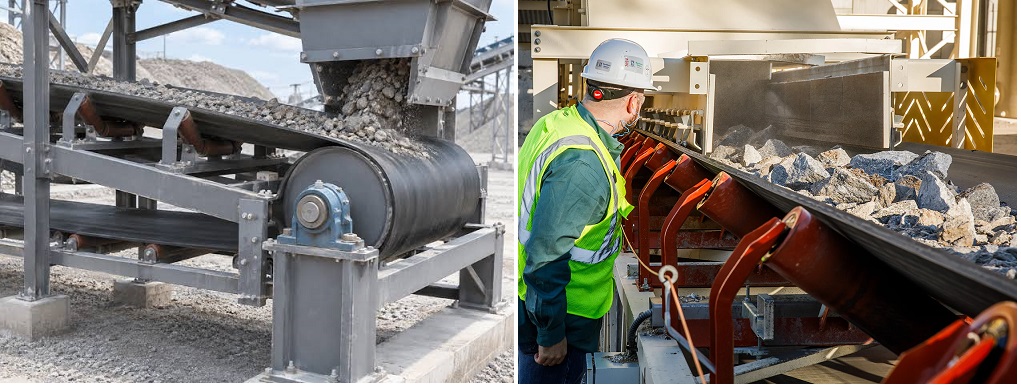
2.3 Conveyor Belt Carcass Structure
The carcass provides mechanical support and contributes to the belt’s ability to withstand impact loading.
| Carcass Type | Structural Characteristics | Typical Applications |
|---|---|---|
| EP Conveyor Belt | Polyester and nylon fabric construction | General mining and material handling |
| NN Conveyor Belt | Nylon fabric with good flexibility and elasticity | Applications requiring flexibility and impact absorption |
| Steel Cord Conveyor Belt | High-strength steel cord reinforcement | Long-distance and heavy-duty conveying |
| Solid Woven Conveyor Belt | Integrated woven carcass structure | Certain heavy-duty and high-risk conveying applications |
A steel cord conveyor belt has high tensile strength, but this does not necessarily mean it has better local impact or puncture resistance than an EP conveyor belt.
Actual performance depends on cover rubber properties, steel cord spacing, transverse reinforcement, and adhesion between the rubber and carcass.
2.4 Material Weight, Size, and Drop Height
The weight and falling height of conveyed materials directly affect impact energy.
The theoretical gravitational potential energy can be calculated using:
E = m × g × h
Where:
- E = Potential energy (J)
- m = Material mass (kg)
- g = Gravitational acceleration (9.81 m/s²)
- h = Falling height (m)
For example, a 50 kg rock falling from a height of 2 meters produces theoretical potential energy of:
E = 50 × 9.81 × 2 = 981 J
The larger the material mass and falling height, the greater the potential impact energy.
Material shape is also important. Sharp-edged rocks may cause more severe local damage than rounded materials of the same weight because the contact area is smaller and local stress is higher.
3. International Standards Related to Impact Resistance
There is currently no single universally applicable ISO conveyor belt standard that establishes a complete impact resistance classification for all conveyor belt types.
However, several international standards can be used to evaluate related mechanical properties.
| Standard | Main Test or Specification | Relevance to Impact Resistance |
|---|---|---|
| ISO 14890 | Textile carcass rubber conveyor belt specifications | Covers product construction and mechanical requirements |
| ISO 15236-1 | Steel cord conveyor belt design and dimensions | Provides requirements for steel cord belt construction |
| ISO 505 | Tear propagation resistance testing | Evaluates resistance to the continued propagation of an existing tear |
| ISO 252 | Adhesion strength testing | Evaluates bonding between conveyor belt components |
| ISO 37 | Rubber tensile stress-strain testing | Measures tensile strength and elongation |
| ISO 4649 | Rubber abrasion resistance testing | Evaluates resistance to abrasive wear |
These standards evaluate different aspects of conveyor belt performance. They should not be presented as direct impact resistance testing standards.
For more specific impact resistance evaluation, manufacturers and buyers can agree on a dedicated drop-weight impact test with clearly defined testing conditions.
4. Drop Weight Impact Testing for Conveyor Belts
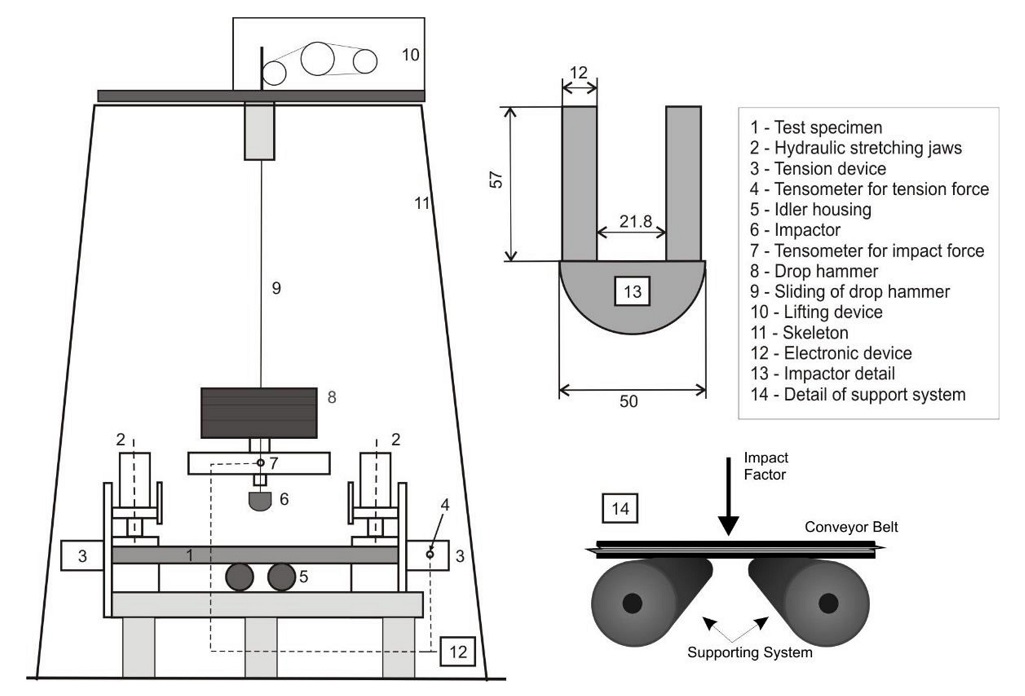
Drop Weight Impact Testing is a practical laboratory method for evaluating the resistance of conveyor belts to sudden mechanical impacts.
The basic principle is to place a conveyor belt specimen on a supporting fixture and drop a hammer of specified mass onto its surface from a predetermined height.
The impact energy is calculated using:
E = m × g × h
The test evaluates several aspects:
1.Whether the rubber cover develops cracks or punctures.
2.Whether the carcass suffers structural damage.
3.Whether delamination occurs between rubber and reinforcement layers.
4.Whether the belt can withstand repeated impacts.
5.Whether the belt retains acceptable mechanical properties after testing.
Different impact head shapes can simulate different material conditions. For example, a spherical impact head represents a relatively rounded contact surface, while a specially designed pointed head can simulate localized impact from sharp materials.
A 2017 research paper, Analysis of Conveyor Belt Impact Resistance, investigated laboratory impact testing using drop hammers weighing approximately 50–110 kg and different impact head designs.
This research demonstrates how dedicated testing equipment can be used to study conveyor belt impact behavior.
It is important to note that the hammer weight and drop height must be agreed upon before testing. There is no universal ISO requirement specifying one fixed combination for all conveyor belts.
5. Practical Examples of Conveyor Belt Impact Resistance
The following examples illustrate how impact energy can be evaluated under different operating conditions. These are engineering reference cases, not certified laboratory results or universal acceptance limits.
Case 1: Iron Ore Mining
| Parameter | Operating Condition |
|---|---|
| Material | Iron Ore |
| Maximum Lump Size | 300 mm |
| Typical Lump Weight | 50 kg |
| Drop Height | 2 m |
| Belt Type | EP Conveyor Belt |
| Upper Cover | 8 mm |
| Lower Cover | 3 mm |
Impact energy:
E = 50 × 9.81 × 2 = 981 J
For this application, the conveyor belt should have sufficient top cover thickness, good dynamic rubber toughness, and appropriate carcass reinforcement.
Additional impact protection, such as impact beds or impact rollers, should be considered at material loading points.
Case 2: Coal Handling System
| Parameter | Operating Condition |
|---|---|
| Material | Coal |
| Maximum Lump Size | 200 mm |
| Lump Weight | 30 kg |
| Drop Height | 1.5 m |
| Belt Type | EP Conveyor Belt |
| Upper Cover | 6 mm |
| Lower Cover | 2 mm |
Impact energy:
E = 30 × 9.81 × 1.5 = 441.45 J
Although the calculated impact energy is lower than in the iron ore example, repeated impacts can still cause significant damage.
The selection should consider rubber elasticity, cover thickness, carcass strength, and the effectiveness of the loading chute and impact support system.
Case 3: Port and Quarry Heavy-Duty Conveying
| Parameter | Operating Condition |
|---|---|
| Material | Limestone |
| Lump Weight | 100 kg |
| Drop Height | 3 m |
| Belt Type | Heavy-Duty EP or Steel Cord |
| Upper Cover | 10 mm |
| Lower Cover | 4 mm |
Impact energy:
E = 100 × 9.81 × 3 = 2,943 J
This represents a high-impact operating condition. A suitable belt should combine a thick and tough top cover, appropriate carcass reinforcement, and good bonding between the rubber and reinforcement layers.
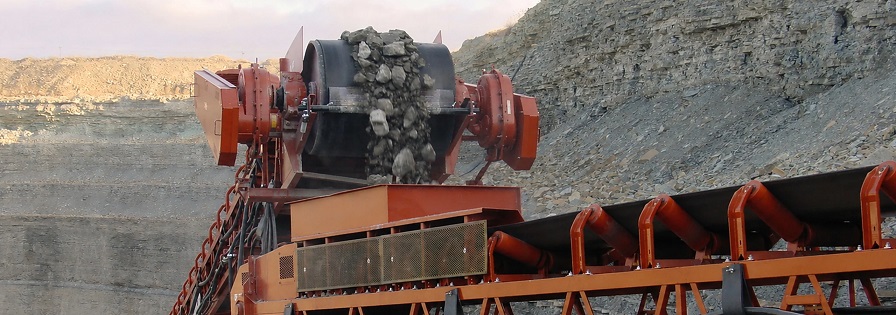
For this type of application, the loading point design is equally important. Properly designed impact beds and chutes can reduce localized stress and extend conveyor belt service life.
Note that calculated gravitational potential energy is not necessarily equal to the energy absorbed by the conveyor belt. Actual impact behavior depends on material rebound, deformation, contact geometry, and supporting structures.
6. Impact Resistance vs. Tear Resistance vs. Abrasion Resistance
These three properties are often confused during conveyor belt selection, but they address different types of damage.
| Performance Property | Main Function | Typical Damage |
|---|---|---|
| Impact Resistance | Withstands sudden mechanical impact | Local deformation, puncture, and carcass damage |
| Tear Resistance | Prevents an existing cut or tear from propagating | Longitudinal or transverse tearing |
| Abrasion Resistance | Resists continuous friction and material wear | Gradual reduction in rubber cover thickness |
For example, a sharp iron ore particle falling onto a conveyor belt may initially cause impact damage or puncture the rubber cover. If a crack develops, tear resistance determines how effectively the rubber resists further crack propagation.
During continuous transportation, friction between the material and belt surface gradually removes rubber, making abrasion resistance essential.
Therefore, heavy-duty conveyor belt selection should consider all these properties rather than focusing on only one performance indicator.
7. How to Specify Impact Resistance in Conveyor Belt Procurement
For international buyers, simply requesting high impact resistance from a conveyor belt manufacturer is insufficient. The testing conditions and acceptance criteria should be clearly defined.
The following is an example of a technical specification for an agreed laboratory impact test.
| Test Parameter | Example Requirement |
|---|---|
| Belt Type | EP Conveyor Belt |
| Belt Strength | EP1000 |
| Upper Cover Thickness | 8 mm |
| Lower Cover Thickness | 3 mm |
| Impact Hammer Weight | 50 kg |
| Drop Height | 2 m |
| Calculated Impact Energy | 981 J |
| Impact Head | Spherical |
| Number of Impacts | 3 |
| Damage Inspection | Visual and structural inspection |
| Acceptance Criteria | Agreed between buyer and manufacturer |
These values are proposed test conditions, not mandatory ISO requirements.
A complete test report should also specify specimen dimensions, belt tension, supporting conditions, impact locations, testing temperature, and post-impact inspection methods.
Only when testing conditions are consistent can buyers make a meaningful comparison between different conveyor belt manufacturers.
8. Conclusion
Impact resistance is an important performance characteristic of conveyor belts used in mining, quarrying, ports, and other heavy-duty material handling applications.
It depends on rubber compound properties, cover thickness, carcass construction, material weight, particle shape, and falling height.
Although several ISO standards cover related mechanical properties, there is no single universal ISO impact resistance classification applicable to all conveyor belts.
For manufacturers and international buyers, a dedicated drop-weight impact test with clearly defined conditions is a practical way to evaluate impact performance.
The best conveyor belt is not necessarily the one with the highest tensile strength or thickest rubber cover. It is the one whose overall construction and material properties match the actual operating conditions and provide reliable long-term performance.
Clarify the Impact Testing SectionStandardize All Table Formatting
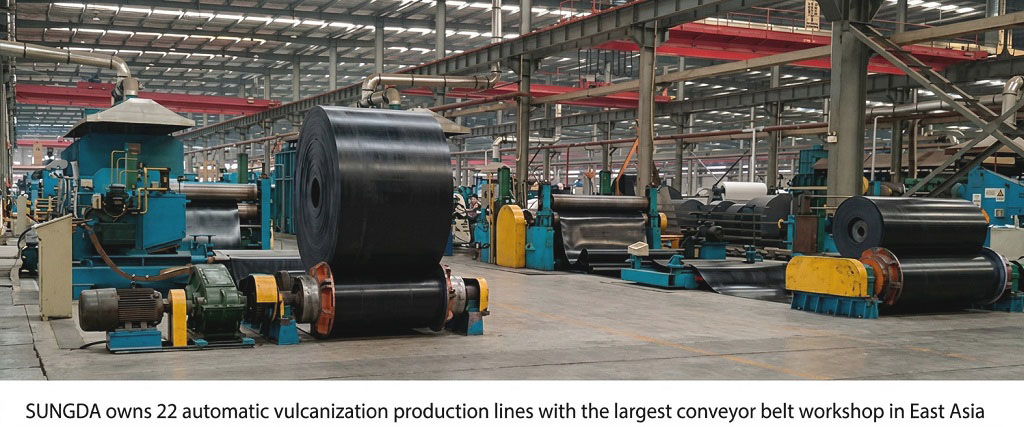
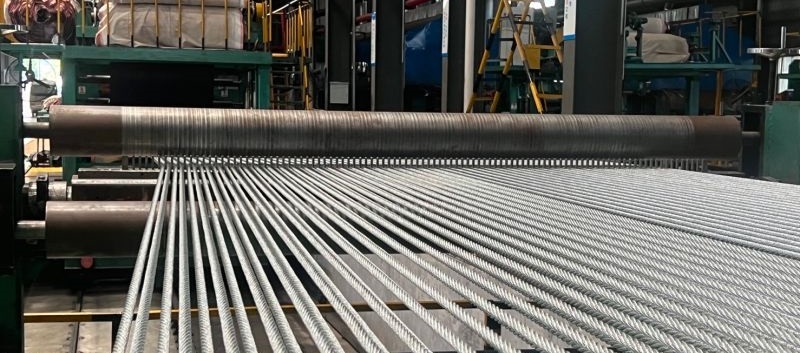
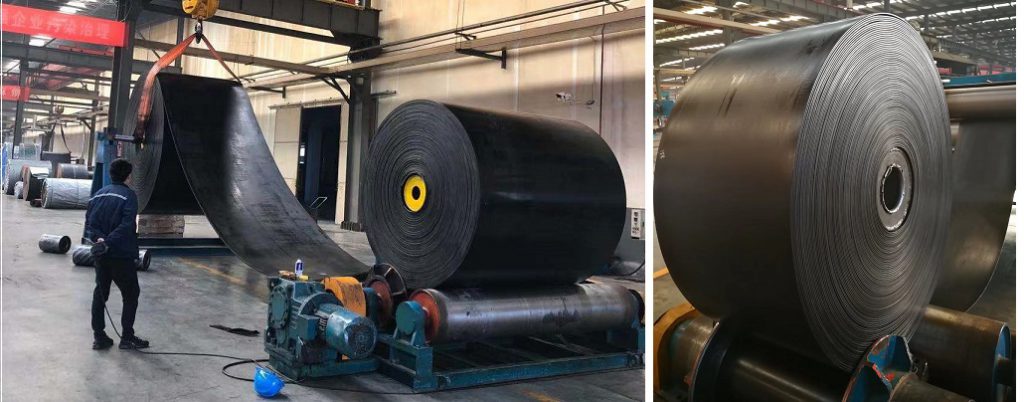
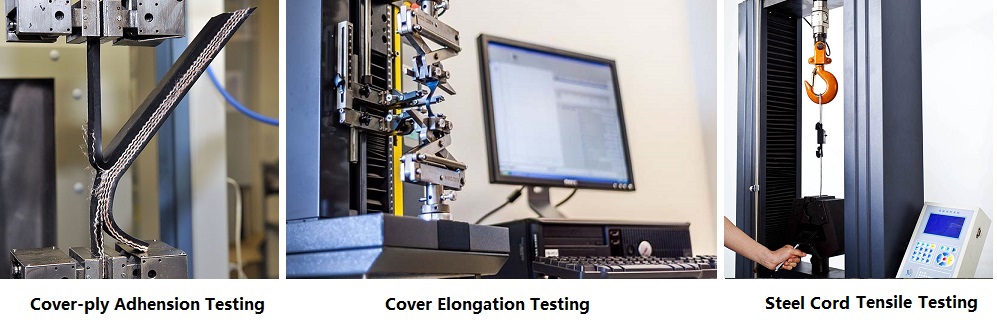
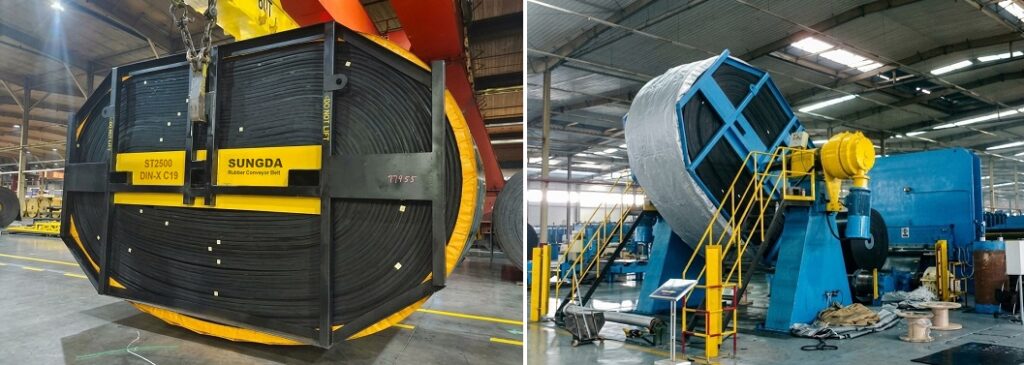
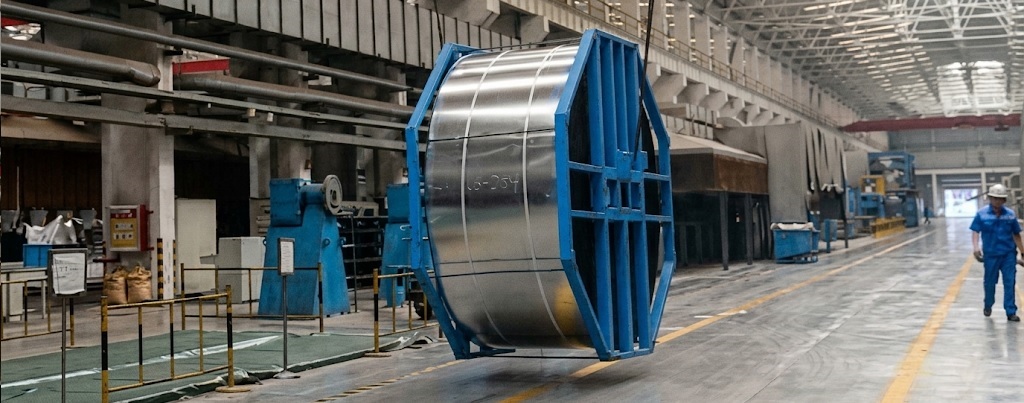
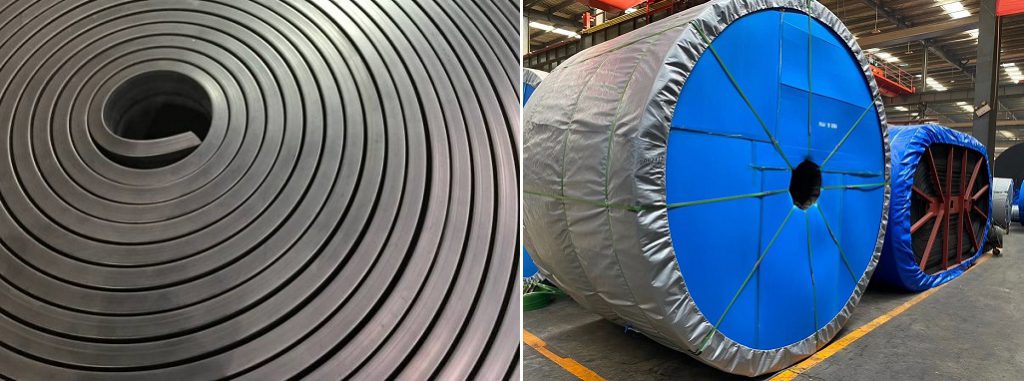
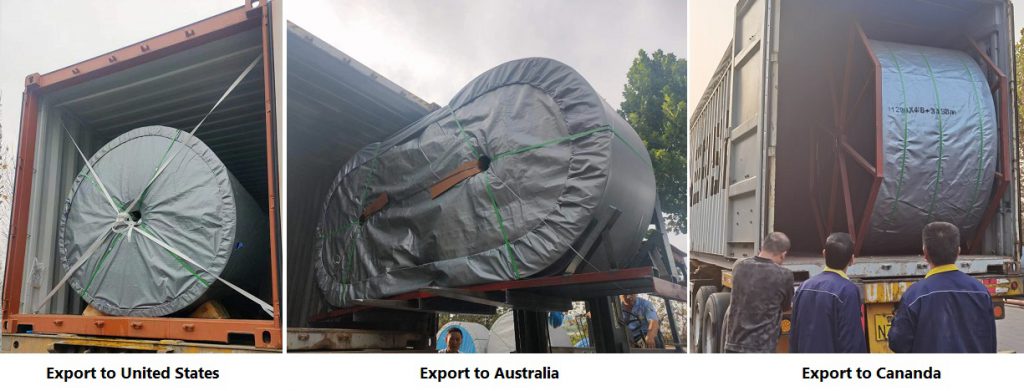
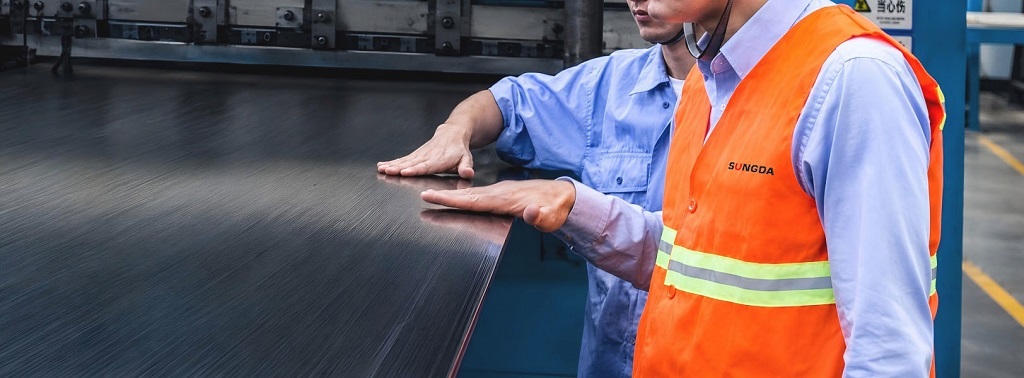
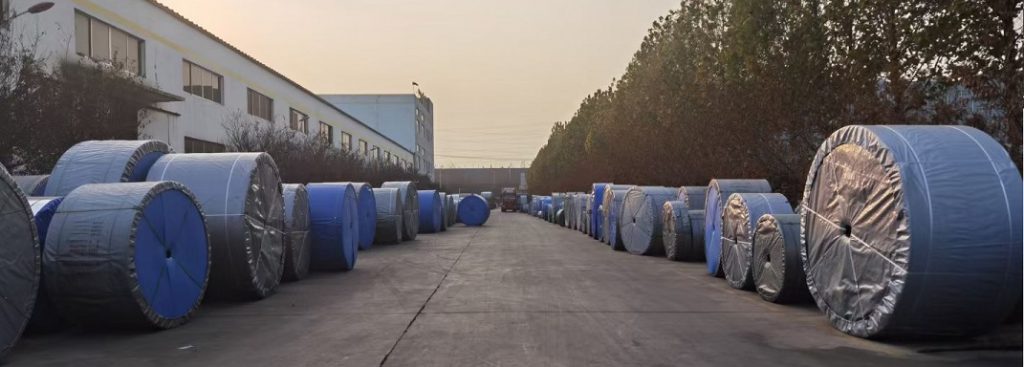
Sungda Conveyor Belt Vulcanization Workshops
Tags: conveyor belt maintenance,EP conveyor belt,Ep conveyor belt specification,IMPACT RESISTANCE,Rubber conveyor belt,Steel cord conveyor belt
Related Products
-
How to Correctly Select ”Tensile Strength”, ”Elongation”, ”Abrasion”, and ”Tear Resistance” for Conveyor Belt?
No. -
What Is the Tear Resistance of Rubber Conveyor Belts?
No. -
How to Choose the Right Oil-resistant Conveyor Belt?
No. -
What Is Conveyor Belt Tensile Strength and Elongation at Break?
No. -

What Are AS, ASTM, and ISO Standards for Rubber Conveyor Belts?
No. -
How to Correctly Select EPDM, SBR, and NBR Rubbers for Conveyor Belts?
No. -
What is the adhesion strength of a conveyor belt?-SUNGDA
No. -
EP Conveyor Belt EP400/3,EP500/4,EP630/4,EP800/4-SUNGDA GROUP
No. -
How to Convert PIW Conveyor belt to EP Belt?
No. -
7 Common Causes of Conveyor Belt Tearing and What are the Preventive Measures?
No.