



-
Product Categories
-
Featured Products
-

What Are AS, ASTM, and ISO Standards for Rubber Conveyor Belts?
In the rubber conveyor belt industry, AS, ASTM, and ISO are three important standards systems used to define product requirements, testing methods, material properties, and quality acceptance criteria.
They represent different standardization organizations and are widely referenced by conveyor belt manufacturers, suppliers, engineers, and international buyers.
Understanding the differences between these standards is essential when manufacturing, specifying, testing, and purchasing rubber conveyor belts for mining, cement, steel, ports, and other bulk material handling applications.
One important point should be clarified: AS, ASTM, and ISO are not three different types of conveyor belts. They are standards systems that establish technical requirements and testing procedures for conveyor belt products and materials.
1. What Do AS, ASTM, and ISO Stand For?

1.1 AS – Australian Standards
AS refers to Australian Standards, developed and published by Standards Australia.
These standards are widely used in Australia’s mining, coal, iron ore, steel, and bulk material handling industries. They are also referenced in international engineering projects, particularly those involving Australian mining companies and contractors.
Typical applications include:
- Textile-reinforced conveyor belts.
- Steel cord conveyor belts.
- Fire-resistant and antistatic conveyor belts.
- Conveyor belt testing and quality inspection.
1.2 ASTM – ASTM International
ASTM International, formerly known as the American Society for Testing and Materials, develops technical standards covering materials, products, testing procedures, and performance evaluation.
In the conveyor belt industry, ASTM standards are frequently used to evaluate the physical and mechanical properties of rubber compounds and conveyor belt products.
Typical applications include:
- Rubber tensile strength testing.
- Elongation at break measurement.
- Rubber hardness testing.
- Abrasion resistance evaluation.
- Heat aging and oil resistance testing.
- Conveyor belt physical property testing.
An important distinction is that many ASTM standards specify how a material or product should be tested rather than establishing a complete set of conveyor belt product acceptance requirements.
1.3 ISO – International Organization for Standardization
ISO stands for the International Organization for Standardization.
ISO standards are internationally recognized and widely adopted in conveyor belt manufacturing, engineering projects, and quality control.
They cover both complete conveyor belt products and individual rubber testing procedures.
Typical applications include:
- Textile conveyor belts.
- Steel cord conveyor belts.
- Rubber cover properties.
- Adhesion strength between conveyor belt layers.
- Abrasion and tear resistance.
- Fire resistance and electrical resistance.
2. Common AS Standards for Conveyor Belts
Australia is one of the world’s major mining markets. Its conveyor belt industry has developed specific technical requirements for heavy-duty applications, particularly in underground mining and bulk material transportation.
The following standards are particularly relevant:
| Standard | Description | Main Application |
|---|---|---|
| AS 1332:2000 | Textile Reinforced Conveyor Belting | EP and other textile-reinforced conveyor belts |
| AS 1333:2024 | Conveyor Belting of Elastomeric and Steel Cord Construction | Steel cord conveyor belts |
| AS 1334 Series | Methods of Testing Conveyor and Elevator Belting | Conveyor belt testing |
| AS 4606:2012 | Grade S Fire-resistant and Antistatic Requirements | Underground mining conveyor belts |
AS 1332 specifies requirements for textile-reinforced conveyor belts, including their construction and performance characteristics.
AS 1333 covers conveyor belts incorporating steel cord reinforcement and elastomeric construction.
The AS 1334 series provides testing methods for evaluating different conveyor belt properties.
AS 4606 addresses fire resistance and antistatic requirements for conveyor belts used in underground mining environments.
Manufacturers supplying the Australian market should always confirm the applicable edition and amendments of each standard before preparing technical specifications or inspection documents.
3. Common ASTM Standards for Conveyor Belts
ASTM standards are particularly useful for evaluating rubber materials and their physical properties.
The following standards are commonly referenced in conveyor belt manufacturing and quality inspection.
| Standard | Test Method | Main Performance Indicator |
|---|---|---|
| ASTM D378 | Rubber Hose and Conveyor Belt Testing | Conveyor belt physical properties |
| ASTM D412 | Tensile Properties of Vulcanized Rubber and Thermoplastic Elastomers | Tensile strength and elongation at break |
| ASTM D2240 | Rubber Hardness Testing | Shore A hardness |
| ASTM D573 | Rubber Deterioration in an Air Oven | Heat aging resistance |
| ASTM D471 | Rubber Property – Effect of Liquids | Oil and liquid resistance |
ASTM D378 – Conveyor Belt Testing
ASTM D378 provides test methods for evaluating the physical properties of rubber flat transmission and conveyor belts.
It is relevant to manufacturers and inspection laboratories conducting conveyor belt quality assessments.
ASTM D412 – Tensile Strength and Elongation
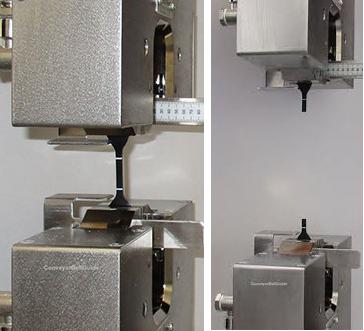
ASTM D412 is widely used to determine the tensile properties of vulcanized rubber and thermoplastic elastomers.
The main parameters include:
- Tensile strength.
- Elongation at break.
- Stress-strain behavior.
These properties are important for evaluating the mechanical performance of conveyor belt cover compounds.
ASTM D2240 – Rubber Hardness
ASTM D2240 specifies the method for measuring the indentation hardness of rubber and other elastomeric materials.
Shore A hardness is commonly used to characterize conveyor belt cover rubber.
ASTM D573 – Heat Aging
ASTM D573 evaluates changes in rubber properties after exposure to heated air.
It helps manufacturers assess the effects of thermal aging on tensile strength, elongation, and other mechanical properties.
ASTM D471 – Oil Resistance
ASTM D471 evaluates the effects of liquids on rubber materials.
It is particularly relevant when selecting NBR-based compounds for oil-resistant conveyor belts.
4. Common ISO Standards for Conveyor Belts
ISO standards cover a wide range of conveyor belt products and rubber testing methods.
For international conveyor belt manufacturers, the following standards are particularly important.
| Standard | Description | Main Application |
|---|---|---|
| ISO 14890 | Textile Conveyor Belts | General-purpose textile conveyor belts |
| ISO 15236 Series | Steel Cord Conveyor Belts | Steel cord conveyor belt requirements |
| ISO 283 | Full Thickness Tensile Strength | Conveyor belt tensile strength |
| ISO 252 | Adhesion Strength | Adhesion between conveyor belt layers |
| ISO 4649 | Abrasion Resistance | Rubber abrasion testing |
| ISO 37 | Rubber Tensile Properties | Tensile strength and elongation at break |
| ISO 188 | Accelerated Ageing | Rubber heat aging |
| ISO 34-1 | Tear Strength | Rubber tear resistance |
| ISO 48-4 | Rubber Hardness | Rubber hardness measurement |
| ISO 7622-2 | Steel Cord Conveyor Belt Tensile Test | Steel cord conveyor belt tensile properties |
ISO 14890 – Textile Conveyor Belts
ISO 14890 specifies requirements for rubber- or plastics-covered textile conveyor belts intended for general-purpose applications.
It covers important product characteristics, including:
- Belt construction and dimensions.
- Tensile strength.
- Cover rubber properties.
- Adhesion between layers.
- Other relevant mechanical requirements.
Manufacturers should note that ISO 14890:2026 is the third edition, replacing ISO 14890:2013. The latest edition should be checked when preparing new technical specifications.
ISO 15236 – Steel Cord Conveyor Belts
ISO 15236 is a key standard series for steel cord conveyor belts.
It addresses the construction, design, dimensions, and mechanical properties of steel cord-reinforced conveyor belts.
It is particularly relevant to long-distance, high-capacity, and heavy-duty conveying systems.
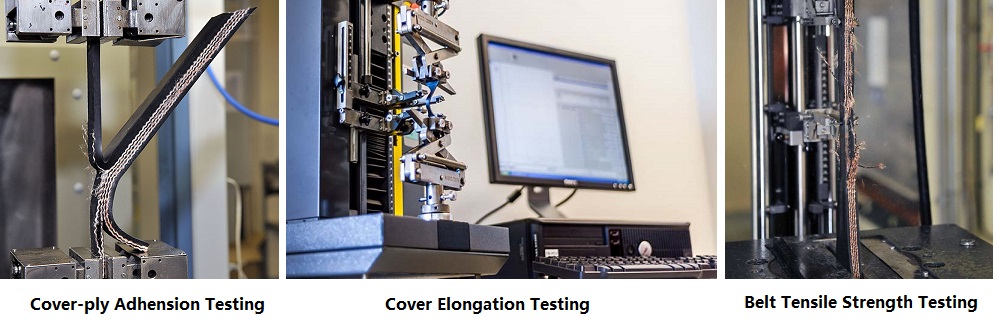
ISO 252 – Adhesion Strength
ISO 252 specifies methods for determining the adhesion strength between different components of a conveyor belt.
Typical adhesion measurements include:
- Cover to ply adhesion.
- Ply to ply adhesion.
- Cover to breaker adhesion, where applicable.
Adhesion strength is critical because poor bonding between layers can cause delamination during conveyor belt operation.
ISO 4649 – Rubber Abrasion Resistance
ISO 4649 is one of the most widely used methods for evaluating the abrasion resistance of rubber compounds.
The test measures the volume loss of a rubber specimen after contact with an abrasive surface under specified conditions.
The result is expressed in cubic millimeters (mm³).
A lower abrasion value generally indicates better abrasion resistance.
This test is particularly important when selecting cover compounds for mining, quarrying, cement, and other applications involving continuous material contact.
5. Differences Between AS, ASTM, and ISO Standards
Although these standards may cover similar technical properties, their purposes and requirements are not necessarily identical.
The following table provides a general comparison.
| Comparison | AS | ASTM | ISO |
|---|---|---|---|
| Standardization body | Standards Australia | ASTM International | International Organization for Standardization |
| Main focus | Australian product and testing requirements | Material properties and testing methods | International product and testing requirements |
| Textile conveyor belts | AS 1332 | ASTM D378 and related methods | ISO 14890 |
| Steel cord conveyor belts | AS 1333 | Relevant ASTM test methods | ISO 15236 |
| Rubber tensile properties | AS 1334 / AS 1683 series | ASTM D412 | ISO 37 |
| Rubber abrasion | AS 1334 / AS 1683 series | Relevant ASTM methods | ISO 4649 |
| Adhesion testing | AS 1334 series | Relevant ASTM methods | ISO 252 |
It is important to understand that similar test methods do not automatically produce interchangeable results.
Differences in specimen preparation, dimensions, conditioning, testing speed, applied load, and calculation procedures may affect the results.
Therefore, manufacturers should follow the exact test method specified in the customer’s technical requirements.
Official Website Portals for ISO, AS, and ASTM
6. How Should Conveyor Belt Manufacturers Apply These Standards?
Consider a typical purchasing specification for an EP conveyor belt supplied to an Australian mining company.
Example: EP Conveyor Belt Specification
| Technical Parameter | Requirement |
|---|---|
| Belt type | EP Conveyor Belt |
| Belt strength | EP 1000 N/mm |
| Top cover thickness | 6 mm |
| Bottom cover thickness | 3 mm |
| Cover grade | DIN Y or equivalent specified grade |
| Tensile strength | According to the specified standard |
| Elongation at break | According to the specified standard |
| Abrasion resistance | According to the specified standard |
| Adhesion strength | According to the specified standard |
| Product standard | AS 1332 |
For this order, the manufacturer should consider the following requirements:
- Confirm that the belt construction and overall product characteristics comply with AS 1332.
- Verify that the cover rubber meets the specified tensile strength, elongation, and abrasion requirements.
- Check EP layer adhesion strength according to the applicable requirements.
- Ensure that all laboratory tests follow the testing methods accepted by the customer.
- Confirm that belt dimensions, tolerances, marking, and inspection documentation meet the contractual requirements.
An important practical point is that a customer may specify AS 1332 as the product standard while requiring ISO 4649 for abrasion testing.
This combination is acceptable when clearly agreed upon in the technical specification. However, the manufacturer must ensure that the test method and acceptance limits are explicitly defined.

7. Recommended Standards System for Conveyor Belt Manufacturers
For manufacturers targeting international markets, it is useful to organize the standards into three main categories.
Level 1: Conveyor Belt Product Standards
These standards define the overall requirements for finished conveyor belt products.
- AS 1332 – Textile Reinforced Conveyor Belting.
- AS 1333 – Steel Cord Conveyor Belting.
- ISO 14890 – Textile Conveyor Belts.
- ISO 15236 – Steel Cord Conveyor Belts.
Level 2: Rubber Material Testing Standards
These standards evaluate the physical and mechanical properties of rubber compounds.
- ISO 37 – Tensile Strength and Elongation at Break.
- ISO 4649 – Abrasion Resistance.
- ISO 34-1 – Tear Strength.
- ISO 188 – Heat Aging.
- ISO 252 – Conveyor Belt Adhesion Strength.
- ASTM D412 – Rubber Tensile Properties.
- ASTM D2240 – Rubber Hardness.
- ASTM D471 – Oil Resistance.
Level 3: Special Application Standards
These standards address specific operating environments and safety requirements.
- AS/NZS 4606 – Fire-resistant and antistatic conveyor belts for underground mining.
- ISO 340 – Laboratory-scale flammability testing.
- ISO 284 – Electrical resistance requirements.
- ISO 7622-2 – Steel Cord Conveyor Belt Tensile Testing.
8. What Should International Buyers Pay Attention to?
When purchasing rubber conveyor belts, buyers should not simply ask whether a manufacturer complies with AS, ASTM, or ISO standards.
They should identify the exact standard, edition, test method, and acceptance criteria required for their application.
For example:
- What are the differences between DIN Y, DIN W, and DIN X cover grades?
- How do AS 1332 and ISO 14890 differ in their requirements for EP conveyor belts?
- Are tensile strength results obtained under ASTM D412 directly comparable with those obtained under ISO 37?
- How do ISO 252 and DIN 22102 address adhesion strength requirements?
- What are the differences between AS 1333 and ISO 15236 for steel cord conveyor belt inspection?
These questions are important when evaluating manufacturers, comparing technical proposals, and ensuring that the supplied conveyor belt meets the actual operating requirements.
Conclusion
AS, ASTM, and ISO standards play different but complementary roles in the rubber conveyor belt industry.
AS standards are particularly important for the Australian mining market. ASTM standards provide widely recognized material testing procedures, while ISO standards offer internationally adopted product specifications and testing methods.
For conveyor belt manufacturers, understanding these standards is not just about passing laboratory tests. It is about developing reliable rubber compounds, controlling production quality, meeting customer specifications, and ensuring long-term conveyor belt performance in demanding industrial environments.
Standards note: Before publishing, verify the latest editions and exact titles of the cited standards, especially AS 1333, AS 1332, ISO 14890, and ASTM D378. Also distinguish product standards from material test methods when stating compliance.
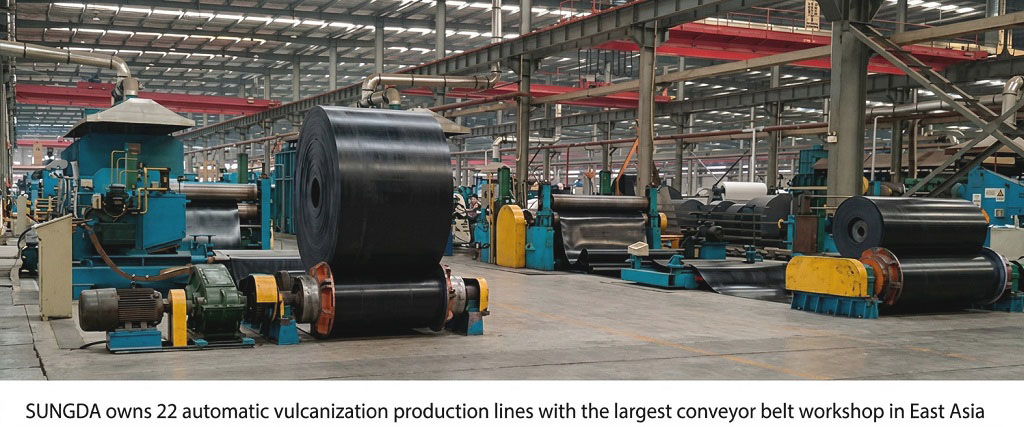
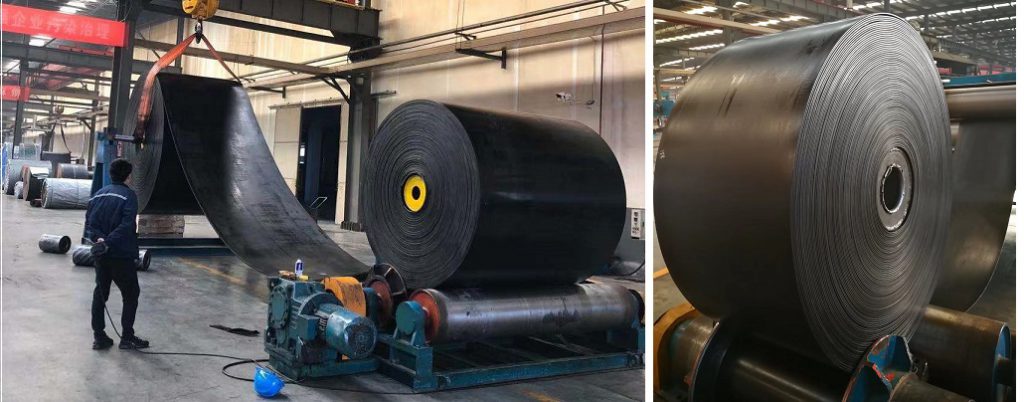
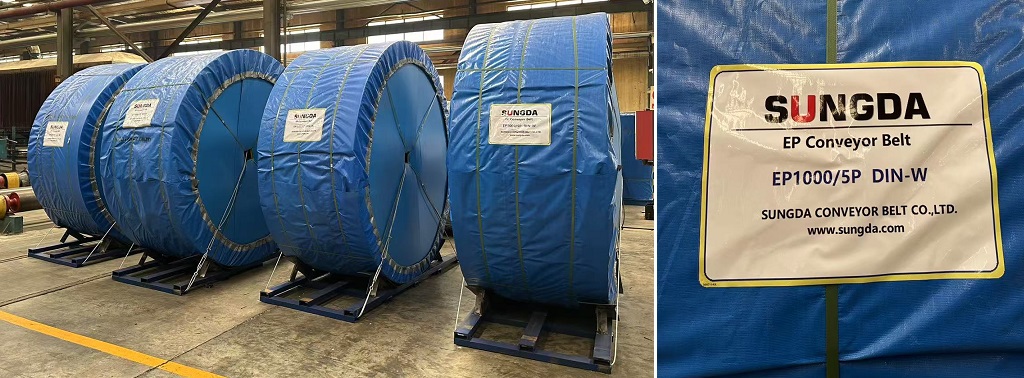
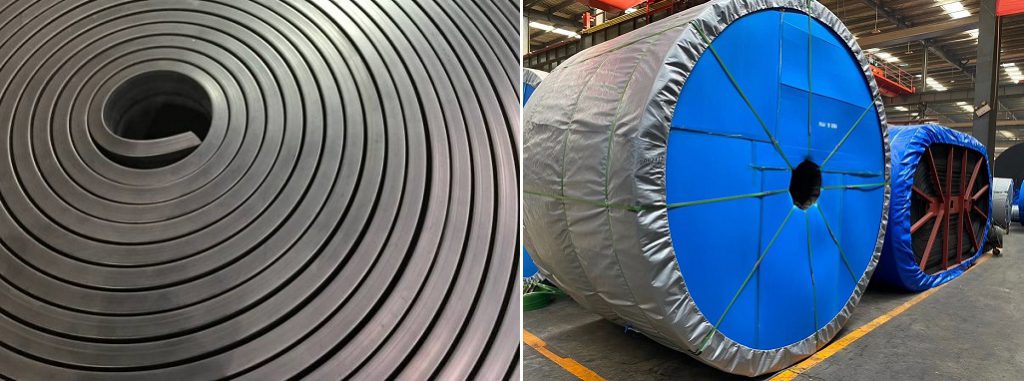
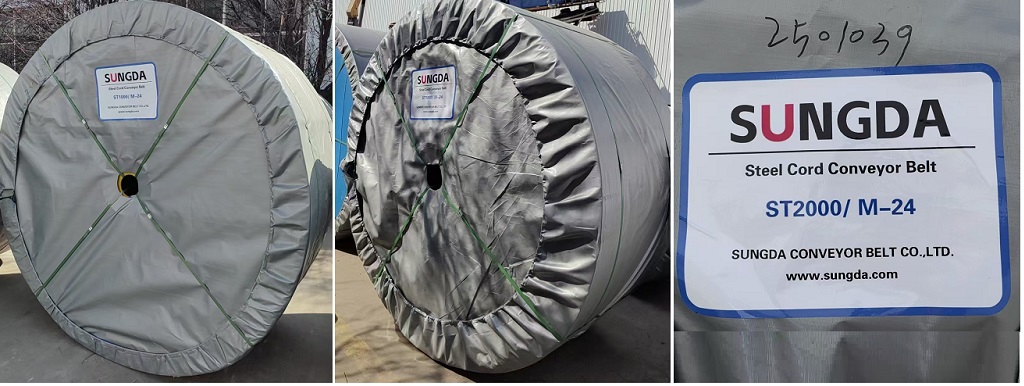
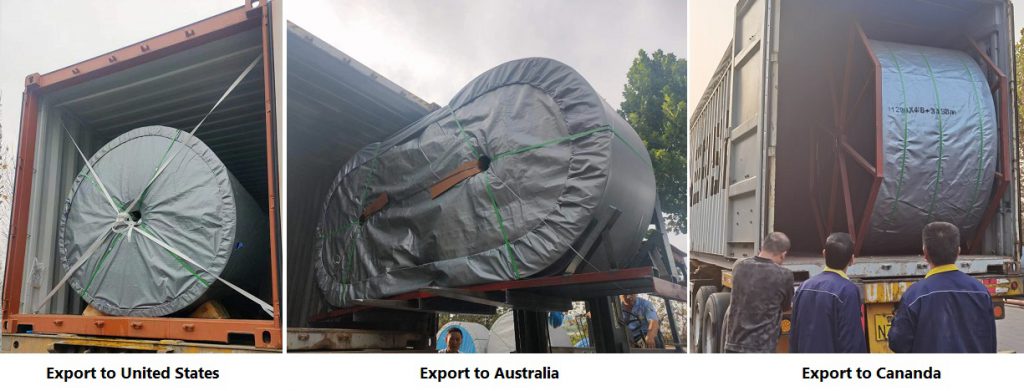
SUNGDA Conveyor Belt Vulcanization Workshops


Tags: AS,DIN,DIN 22102,EP conveyor belt,ISO,Rubber conveyor belt,Standard
Related Products
-
What Are the Tensile Strength and Elongation in Rubber Conveyor Belts?
No. -
How to Correctly Select EPDM, SBR, and NBR Rubbers for Conveyor Belts?
No. -
What is the adhesion strength of a conveyor belt?-SUNGDA
No. -

How to Convert PIW Conveyor belt to EP Belt?
No. -
7 Common Causes of Conveyor Belt Tearing and What are the Preventive Measures?
No. -

The Top 5 Rubber Conveyor Belt Manufactures in China 2026(with website & contact info)
No. -
How to Choose Right EP Conveyor Belt –SUNGDA Group
No. -
EP Rubber Conveyor Belt
No. -
Pipe (Tubular)Conveyor Belt
No. -
Material Composition of High-Quality Conveyor Belts (from ContiTech & Dunlop)
No.