



How to Chooe Right Steel Cord Conveyor Belt
Scientific Selection of Steel Cord Conveyor Belts: A One‑Stop Practical Guideline from Principles to Calculation
Steel cord conveyor belts serve as core equipment for bulk material handling in heavy‑duty modern industries, widely deployed in coal mining, mineral processing, port terminals, metallurgy, cement manufacturing and power plants for long‑distance, high‑capacity and high‑tension material transportation. For industrial procurement and technical personnel, scientific belt selection directly determines the safety, operational stability, energy consumption and service life of conveyor systems. Following a logical sequence of basic concepts‑structural analysis‑application matching‑formula calculation‑comprehensive selection recommendations, this article delivers professional, easy‑to‑understand and implementable guidelines to support accurate selection for industrial conditions.
- Basic Definition of Steel Cord Conveyor Belts
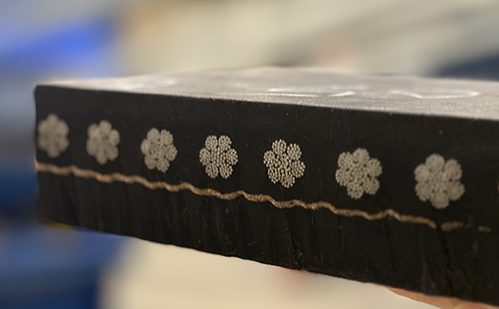
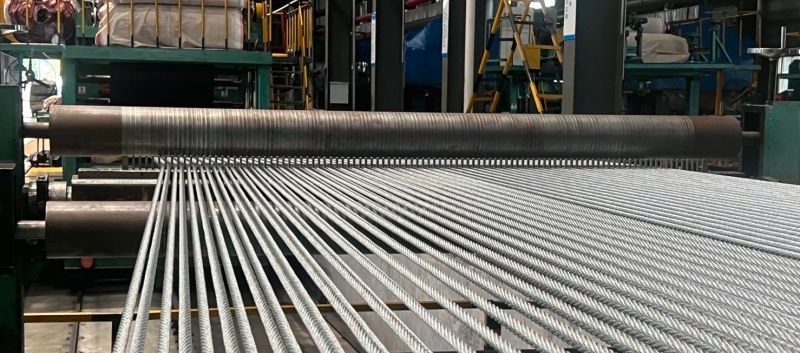
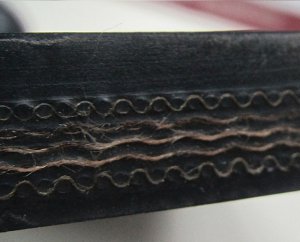
A steel cord conveyor belt is a heavy‑duty conveyor belt high‑temperature vulcanized with high‑strength galvanized steel cords as longitudinal load‑bearing reinforcement, encapsulated by special rubber / elastomer compounds. It represents a high‑grade product distinct from nylon (NN) and polyester (EP) fabric‑reinforced conveyor belts. Essentially, metal steel cords provide ultimate tensile performance while rubber cover compounds deliver wear resistance, corrosion protection, impact resistance and bonding protection, forming an integrated structure of “high‑strength reinforcement plus flexible protection”. Product design and inspection comply with ISO 15236 Steel cord conveyor belts.
Compared with fabric‑reinforced belts, steel cord conveyor belts feature five core advantages:
High tensile strength: Longitudinal tensile strength ranges from 630 N/mm to 5400 N/mm, far exceeding the upper limit of fabric belts and suitable for ultra‑high‑tension applications.
Long conveying distance: Single‑belt installation can reach several kilometres up to more than ten kilometres without intermediate transfer points, greatly simplifying system layout.
Heavy load capacity: Capable of transporting high‑density and large‑size bulk materials with throughput up to thousands of tonnes per hour.
Low elongation: Elongation under rated load ≤ 0.25 %, nearly free of plastic deformation, minimizing frequent tension adjustment.
Extended service life: Under normal operating conditions, premium products can achieve a service life of 8‑15 years, 2‑3 times that of fabric belts, delivering lower total‑life‑cycle cost.
In short: fabric‑reinforced belts apply to short‑distance, light‑duty and cost‑sensitive scenarios; steel cord conveyor belts are mandatory for long‑distance, heavy‑duty, high‑tension and high‑reliability conditions.
- Analysis of Key Steel Cord Structure: Determinants of Belt Performance
Steel cord reinforcement acts as the “load‑bearing backbone” of the belt. Its structural parameters directly govern tensile strength, impact resistance, flex‑fatigue performance and corrosion resistance, constituting the core basis for belt selection. All structural indicators shall meet technical requirements for steel cord reinforcement, core rubber and cover rubber specified in ISO 15236‑1.
2.1 Key Structural Parameters and Performance Impacts
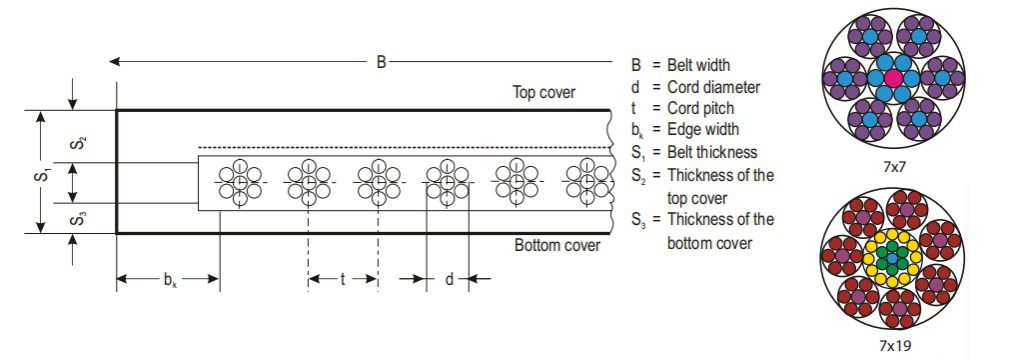
Steel cord diameter
Diameters range from 2.8 mm to 11.3 mm, increasing with strength grade (e.g. ST1000 matched with φ3.4 mm; ST2500 matched with φ7.2 mm). Larger cords deliver higher breaking strength per cord and improved overall belt tensile strength and impact resistance. Excessively large cords, however, reduce belt flexibility and aggravate flex‑fatigue loss; drum diameter shall be selected in accordance with ISO 15236‑2.
Cord pitch (centre‑to‑centre distance between adjacent cords)
Typical pitch ranges from 10 mm to 17 mm and defines cord arrangement density. Smaller pitch enables more uniform stress distribution and better tear‑resistance against local impacts. Excessive pitch raises risks of material penetration and local cracking, and is only fit for light‑duty fine‑material applications.
Breaking strength
Ultimate tensile load of individual steel cords, forming the basis for belt strength calculation. The strength grade (ST rating) of steel cord conveyor belts is defined as total breaking strength of all steel cords divided by belt width, in N/mm. For instance, ST1000 means nominal tensile strength ≥ 1000 N/mm per millimetre of belt width. ST strength grading follows ISO 15236.
Galvanized corrosion‑protection grade
Steel cord coatings comply with ISO 2232 for cold‑drawn galvanized steel wires. Three categories are available: standard galvanized coating for dry indoor service; heavy zinc coating for humid, open‑air and salt‑fog environments such as ports and underground mines; zinc‑aluminium alloy coating for chemically aggressive and saline‑alkali conditions to retard wire corrosion and wire breakage.
Adhesion strength of core rubber
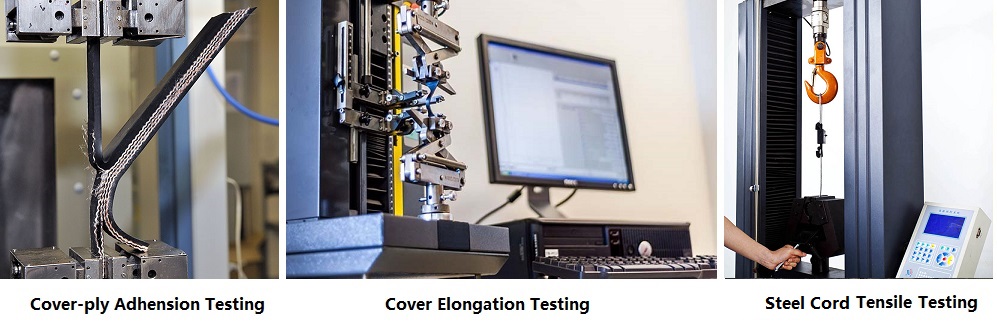
Core rubber fills gaps between steel cords and integrates steel cords with rubber matrix. Adhesion tests follow ISO 252. ISO 15236 specifies that cord‑to‑rubber bonding performance shall satisfy fatigue‑service requirements. Insufficient adhesion will cause delamination and cord pull‑out, potentially leading to catastrophic belt rupture. Superior bonding improves flex‑fatigue resistance for long‑distance layouts with multiple pulleys.
2.2 Correspondence between Structure and Performance
‑ Tensile strength → steel cord diameter & total breaking strength
‑ Impact resistance → steel cord diameter, cord pitch & cover rubber thickness
‑ Flex‑fatigue resistance → steel cord flexibility & core‑rubber bonding strength
‑ Corrosion service life → galvanized coating grade & edge‑rubber sealing performance
‑ Tear resistance → cord pitch & optional transverse reinforcement layers
- Application‑Oriented Matching for Mainstream Industries
Cover‑rubber performance, reinforcement structure and corrosion protection shall match service conditions, material properties and ambient environment. Wear resistance is tested per ISO 4649, heat resistance per ISO 4195, and flame‑retardant and anti‑static properties per ISO 340.
3.1 Coal & Mineral Mining (Underground Main Conveyors, Inclined Shafts)
‑ Core requirements: flame‑retardant, anti‑static, high tensile strength, tear‑resistant, moisture‑resistant
‑ Selection guidelines: Underground belts shall satisfy flame‑retardant and anti‑static requirements of ISO 340. ST1600‑ST4000 grades are adopted for long‑distance inclined shafts. Transverse tear‑resistant reinforcement is recommended for lump‑coal impact conditions, with top cover thickness ≥ 6 mm.
3.2 Port Terminals (Bulk Cargo Handling)
‑ Core requirements: high tensile strength, wear‑resistant, weather‑resistant, salt‑spray resistant
‑ Selection guidelines: Heavy‑zinc‑coated steel cords complying with ISO 2232 for open‑air salt‑fog exposure. High‑wear‑resistant cover compounds evaluated by ISO 4649 for coal and ore handling. ST2500‑ST5400 grades for long‑distance transfer, belt width ranging 800‑2200 mm.
3.3 Metallurgical Industry (High‑Temperature & Heavy‑Duty Materials)
‑ Core requirements: heat‑resistant, impact‑resistant, burn‑resistant
‑ Selection guidelines: Heat‑resistant cover rubber complying with ISO 4195 for sinter and hot materials at 100‑150 °C. Top cover thickness increased to ≥ 8 mm for heavy impact conditions. ST2000‑ST3500 grades for combined high‑temperature and high‑impact service.
3.4 Cement Industry (Limestone & Clinker Transportation)
‑ Core requirements: wear‑resistant, heat‑resistant, dust‑abrasion resistant
‑ Selection guidelines: Wear‑resistant compounds for limestone; heat‑resistant compounds graded per ISO 4195 for clinker. ST1250‑ST2500 for long‑production‑line conveying. Top cover ≥ 6 mm for lump rock.
3.5 Power Generation (Coal‑fired Fuel Handling)
‑ Core requirements: wear‑resistant, flame‑retardant, high operational reliability
‑ Selection guidelines: Wear‑resistant and flame‑retardant formulations referenced to ISO 4649 and ISO 340. ST1000‑ST2000 grades. Low‑elongation and high‑adhesion belts preferred for continuous‑run power‑plant systems.
- Core Selection Calculations for Industrial Application
Belt selection focuses on calculating required tensile grade and belt width to avoid safety risks from under‑specification or unnecessary cost from over‑specification. Tension and width calculations are based on ISO 5048 Conveyors — Calculation of operating power and tension.
4.1 Tensile‑Strength Calculation
Formula:
ST≥(Fmax×K)/B
‑ Parameters:
‑ ST: Steel‑cord belt strength grade (N/mm) per ISO 15236, e.g. ST1000, ST1600, ST2500
‑Fmax: Maximum operating tension of belt (N), calculated according to ISO 5048 based on conveying distance, inclination angle, load and belt speed
‑ K: Safety factor: 6‑8 for normal conditions; 8‑10 for heavy‑duty, impact‑prone, high‑temperature or underground conditions
‑ B: Belt width (mm)
Simplified field estimation:
ST≥(Maximumconveyingload×Safetyfactor)/Effectiveloaded area
Round‑up result to standard ST grades defined in ISO 15236.
4.2 Belt‑Width Calculation
Formula:
B≥Q/(3.6×v×ρ×C)
‑ Parameters:
‑ B: Minimum required belt width (mm)
‑ Q: Rated throughput (t/h)
‑ v: Belt speed (m/s), typically 1.6‑4.0 m/s
‑ ρ: Material bulk density (t/m³)
‑ C: Material cross‑section coefficient: 0.85‑0.95 for trough idlers; 0.5‑0.6 for flat idlers, values referenced to ISO 5048
Round‑up computed width to internationally standardized belt‑width series.
4.3 Auxiliary Rule for Cover‑Rubber Thickness
‑ Top (carrying‑side) cover: ≥ 4 mm for fine materials; ≥ 6 mm for medium‑size materials; ≥ 8 mm for lump materials with heavy impact
‑ Bottom (return‑side) cover: ≥ 4 mm for general use; ≥ 6 mm for long‑distance high‑friction operation
‑ According to ISO 15236, cover thickness shall be properly matched to steel‑cord diameter for adequate protection and cushioning.
- Comprehensive Selection Recommendations
Adopt the four‑step logic: Define application conditions → Calculate key parameters → Specify cord‑rubber configuration → Validate and finalize model, to achieve accurate, safe and cost‑effective selection.
Step 1: Clarify application and material characteristics
Confirm industry, conveying distance, inclination angle, throughput, lump‑size, bulk density, material temperature, ambient humidity and corrosiveness. Determine cover‑rubber type (general‑purpose, wear‑resistant, heat‑resistant, flame‑retardant, chemical‑resistant) and steel‑cord coating requirements with performance aligned to corresponding ISO standards.
Step 2: Calculate core parameters (strength and width)
Compute tension and belt width following ISO 5048. Round‑up minimum width and ST rating to international standard series. Prefer standard specifications to mitigate procurement, splicing and spare‑part difficulties caused by non‑standard custom products.
Step 3: Select steel‑cord structure and cover‑rubber properties
‑ Match steel‑cord diameter and cord pitch with strength grade; adopt larger‑diameter cords with smaller pitch for heavy‑impact service.
‑ Select appropriate cord coating grade: heavy‑zinc or alloy coatings complying with ISO 2232 for humid, salt‑spray and corrosive environments.
‑ Specify cover‑rubber thickness and compound formulation based on material characteristics; ensure wear‑resistance, heat‑resistance and flame‑retardant performance satisfy ISO 4649, ISO 4195 and ISO 340 respectively.
Step 4: Validation and final specification
Verify safety factor and minimum allowable pulley diameter per ISO 15236‑2. Steel‑cord belts require vulcanized splices; splice design and fabrication follow ISO 15236‑3. Prioritize products complying with the full set of international standards to guarantee interchangeability and consistent quality for overseas projects and global manufacturing sites.
Conclusion
Selecting steel cord conveyor belts is far more than specifying catalogue sizes; it represents systematic matching for real‑world operating conditions. Procurement and engineering personnel shall keep four core principles in mind: strength guarantees safety, width guarantees throughput, structure guarantees performance, and rubber compound guarantees service life. Supported by ISO 15236, ISO 5048 and other international standards together with the conceptual explanations, structural breakdown, scenario matching and calculation workflows in this article, engineers can complete end‑to‑end belt selection, achieving safe, energy‑efficient conveyor systems with optimized life‑cycle cost.
List of key international standards:
ISO 15236‑1/2/3: Steel cord conveyor belts (Products, selection, splices)
ISO 5048: Conveyors — Calculation of operating power and tension
ISO 2232: Cold‑drawn galvanized steel wires
ISO 252: Conveyor belts — Adhesion test
ISO 4649: Rubber — Test for abrasion resistance
ISO 4195: Heat‑resistant conveyor belts
ISO 340: Conveyor belts — Flame‑retardant and anti‑static tests
Steel cord conveyor belt specification:
Strength grade | Tensile strength (N/mm) | Steel Cord pitch (mm) | Steel Cord diameter (mm) | Min.breaking force (KN) | Min.cover thickness (mm) |
ST-500 | 500 | 10 | 2.5 | 5.5 | 4 |
ST-630 | 630 | 10 | 2.8 | 7 | 4 |
ST-800 | 800 | 10 | 3 | 8.9 | 4 |
ST-1000 | 1000 | 12 | 3.4 | 12.9 | 4 |
ST-1250 | 1250 | 12 | 3.8 | 16.1 | 4 |
ST-1400 | 1400 | 12 | 4.3 | 18 | 4 |
ST-1600 | 1600 | 12 | 4.7 | 20.6 | 4 |
ST-2000 | 2000 | 12 | 5.0 | 25.6 | 4 |
ST-2250 | 2250 | 12 | 6.6 | 29 | 4 |
ST-2500 | 2500 | 15 | 6.8 | 40 | 5 |
ST-2800 | 2800 | 15 | 7 | 44.8 | 5 |
ST-3150 | 3150 | 15 | 7.3 | 50.5 | 5.5 |
ST-3500 | 3500 | 15 | 8.2 | 56 | 6 |
ST-4000 | 4000 | 15 | 8.8 | 63.5 | 6.5 |
ST-4500 | 4500 | 16 | 9.7 | 76.3 | 7 |
ST-5000 | 5000 | 17 | 10.9 | 91 | 7.5 |
ST-5400 | 5400 | 17 | 11.3 | 98.2 | 8 |
Strength grade | Tensile strength (N/mm) | Steel Cord pitch (mm) | Steel Cord diameter (mm) | Min.breaking force (KN) | Min.cover thickness (mm) |
ST-500 | 500 | 10 | 2.5 | 5.5 | 4 |
ST-630 | 630 | 10 | 2.8 | 7 | 4 |
ST-800 | 800 | 10 | 3 | 8.9 | 4 |
ST-1000 | 1000 | 12 | 3.4 | 12.9 | 4 |
ST-1250 | 1250 | 12 | 3.8 | 16.1 | 4 |
ST-1400 | 1400 | 12 | 4.3 | 18 | 4 |
ST-1600 | 1600 | 12 | 4.7 | 20.6 | 4 |
ST-2000 | 2000 | 12 | 5.0 | 25.6 | 4 |
ST-2250 | 2250 | 12 | 6.6 | 29 | 4 |
ST-2500 | 2500 | 15 | 6.8 | 40 | 5 |
ST-2800 | 2800 | 15 | 7 | 44.8 | 5 |
ST-3150 | 3150 | 15 | 7.3 | 50.5 | 5.5 |
ST-3500 | 3500 | 15 | 8.2 | 56 | 6 |
ST-4000 | 4000 | 15 | 8.8 | 63.5 | 6.5 |
ST-4500 | 4500 | 16 | 9.7 | 76.3 | 7 |
ST-5000 | 5000 | 17 | 10.9 | 91 | 7.5 |
ST-5400 | 5400 | 17 | 11.3 | 98.2 | 8 |
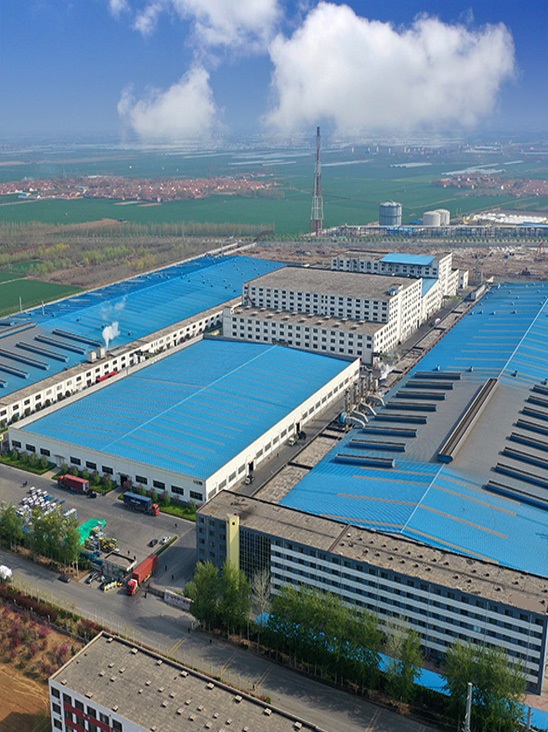
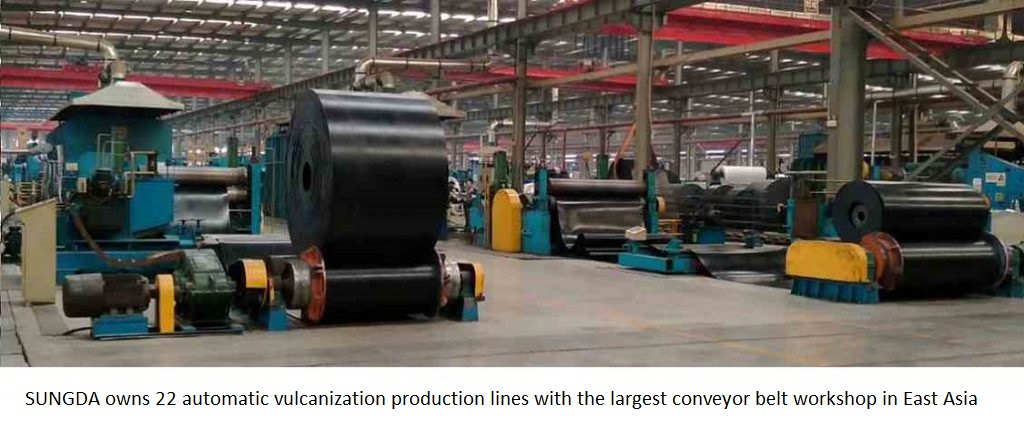
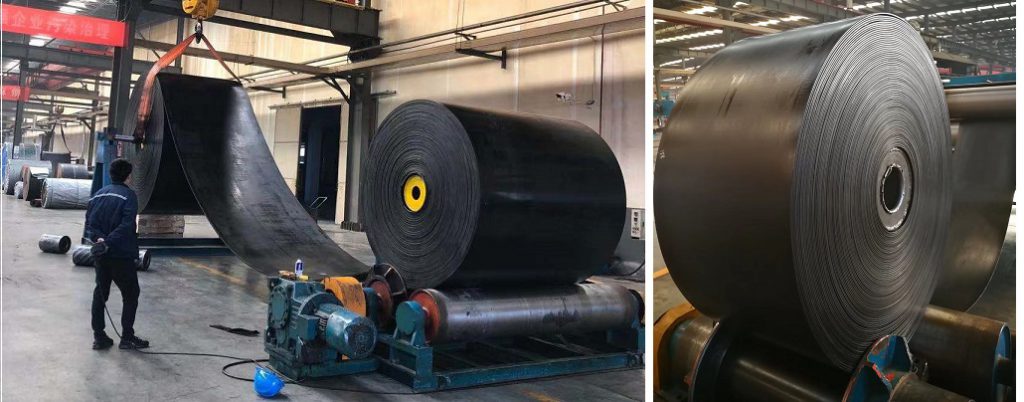
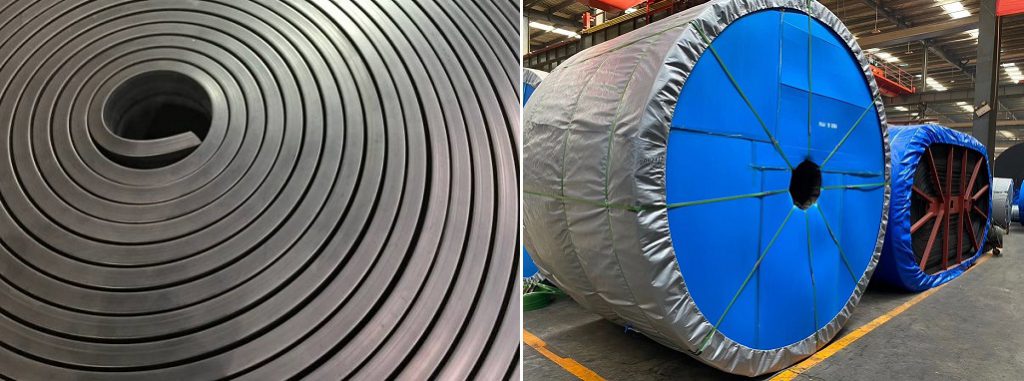
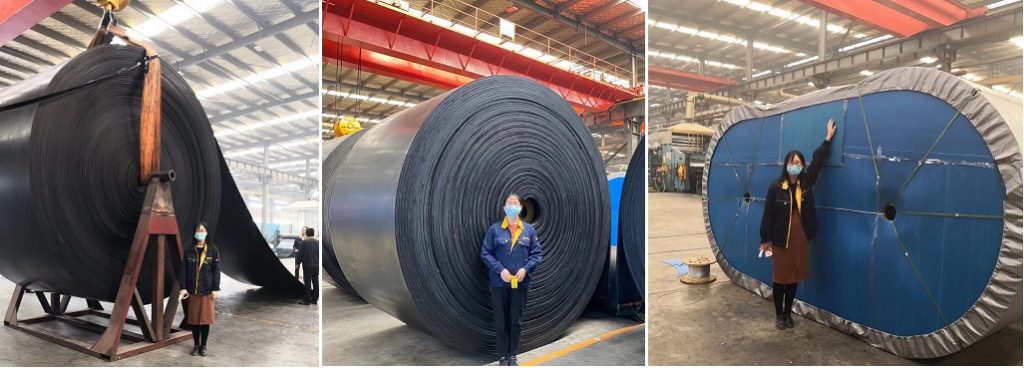
Sungda Conveyor Belt Vulcanization Workshops

Tags: steel cord,Steel cord conveyor belt
Related Products
-
Material Composition of High-Quality Conveyor Belts (from ContiTech & Dunlop)
No. -
What are the Basic Indicators that Determine the Quality of Conveyor Belts?
No. -
What Are the Key Properties of T1, T2, T3, T4 Heat-Resistant Conveyor Belts?
No. -
What’s “kg/cm²” in Conveyor Belt and How Convert it into other Units?
No. -
The Most Comprehensive National and Organizational Conveyor Belt Testing Standards
No. -
7 Common Causes of Conveyor Belt Tearing and What are the Preventive Measures?
No. -
What are the daily maintenance measures for steel cord conveyor belts?
No. -
What are the commonly used methods for non-destructive testing of steel cord conveyor belts
No. -
Steel cord conveyor belt joint solution
No. -
The core of the conveyor belt-carcass structure and formula
No.