



Heat Resistant Conveyor Belt
General Introduction:
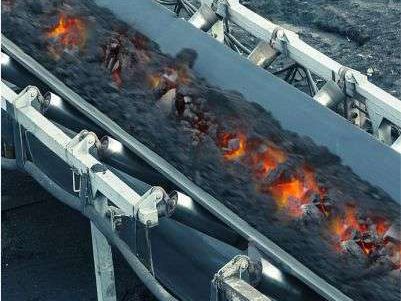
General rubber conveyor belts can transport materials below 80°C, such as coal, ores, sand, gravel, and grains. However, certain specialized industries handle materials at extremely high temperatures, such as clinker, cement products, dry clay in cement plants, sintered ore, coke, pellets, slag in Steel mill, as well as materials in Foundries and Taconite industries. The temperatures in these industries often range from 200 to 500 degrees Celsius, and sometimes even exceed 800 degrees Celsius.
Temperature range and belt surface temperature of high-temperature materials (for reference only)
Materials Carried | Lump Size | Temperature of Materials Carried | Belt Surface Temperature |
Sintered Ore | 25~200mm (1~8 inch) | 200~400°C (390~750°F) | 130~150°C (270~300°F) |
Return of Sintered Ore | 10mm(0.4 inch) downward | 260°C (480°F) | 150~190°C (300~370°F) |
Coke | 100~200mm (4~8 inch) | 70~100°C (160~210°F) | 50~60°C (120~140°F) |
Raw Materia | 30 mm(1.2 inches) downward | 180~220°C (360~410°F) | 100~120°C (210~250°F) |
Clinker | 10~30 mm (0.4~1.2 inch) | 100~220°C (210~410°F) | 100~110°C (210~230°F) |
Cement | Powder | 100~125°C (210~250°F) | 80~90°C (170~190°F) |
Metal Powder | —— | 170°C (340°F) | 120~130°C (250~270°F) |
Molding Sand | —— | 200~250°C (390~480°F) | 80~90°C (170~190°F) |
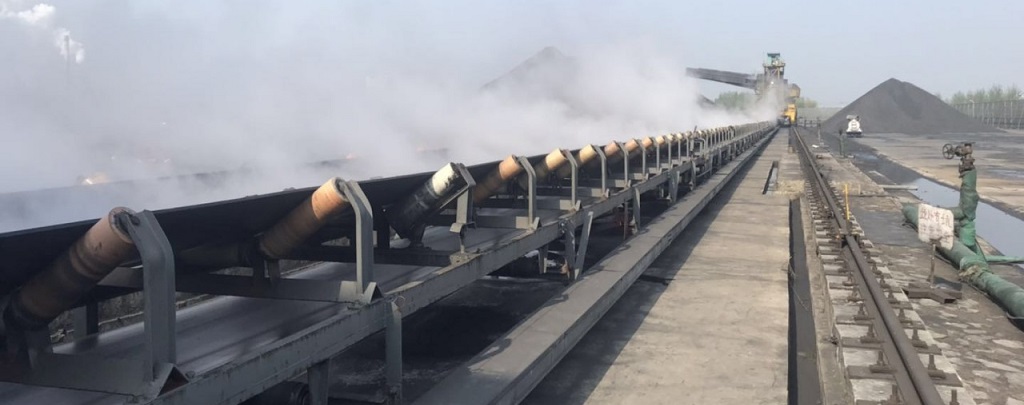
But natural rubber cannot withstand such high temperatures, and the severe wear, shock, and tension further accelerate the aging process of conveyor belts, causing rubber hardening and cracking. Therefore, when manufacturing conveyor belts for handling high-temperature materials, it is necessary to incorporate appropriate chemical formulations to create heat-resistant conveyor belts. In the chemical industry, DIN 22102 classifies heat-resistant conveyor belts into three grades: T1, T2, and T3, corresponding to test temperatures of 120, 150, and 180 degrees Celsius, respectively.
The heat resistant conveyor belt is made up of high temperature burning layer, transition layer, the organic insulation layer, a strong heat-resistant layer. The rubber surface uses EPDM(Ethylene Propylene Diene Monomer) or SBR (Polymerized Styrene-Butadiene Rubber) to make rubber cover respectively; the polyester canvas or canvas with high strength and high permeability can make the strong layer. These will be bonded together through high-temperature vulcanization.
The chemical principles of heat resistant rubber:
The heat resistant cover produces porous carbonized stratum as a conveyor belt carrying high-temperature material, this carbonized stratum has burning resistant function, and prevent the high temperature from transferring further into the belt center body, so that can protect the internal strength of the heat resistant conveyor belt. Furthermore, the carbonized stratum generates irregular tiny crack during the conveyor belt’s running, which can have a cooling effect for the conveyor belt itself.
Application:
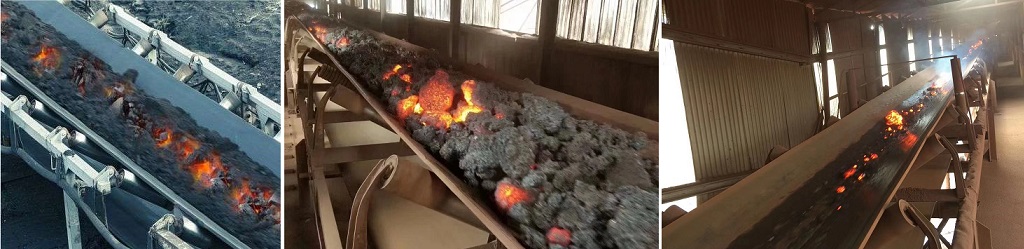
Used in cement plant, steel and iron factory, metallurgy, coking industry. Mainly for conveying coke iron and steel castings cement clinker and high-temperature materials feature: Product selects cotton canvas or EP canvas as skeleton material. Cover rubber and cushion rubber is styrene-butadiene rubber or chlorobutadiene that has good heat-resistant work, and it is suitable for carrying materials under the temperature of 150℃.
The guide for choosing heat resistant conveyor belt cover type:
| Temperature | Type | Cover Ruber | Peak Material Temp. | Cont. Material Temp. | Application |
| Low Temperature | T1 | SBR | 150°C | 100°C | Low temperature with abrasive material (coke,sintered products,etc.) |
| High Temperature | T2 | EPDM | 200°C | 150°C | High-temperature application. (dried clay,cement,clinker,etc.) |
| Super Temperature | T3 | EPDM | 250°C | 180°C | Super high-temperature applications (sintered ore,cement clinker,chemicals,etc.) |
10 Technical FAQs About Heat-Resistant Conveyor Belts for High-Temperature Bulk Handling
1.How do I determine the correct Heat-Resistant (HR) conveyor belt rating for my operating temperature?
Selecting the correct heat-resistant grade requires evaluating two distinct thermal parameters: Continuous Material Temperature and Maximum Peak/Surge Temperature, rather than relying on ambient air temperature alone.
Conveyor belts are subjected to thermal degradation through direct contact with hot bulk materials (e.g., cement clinker, sintered ore, foundry sand, or slag). Operating a belt above its rated continuous limit accelerates rubber hardening, surface cracking, and ply delamination.
Standard DIN 22102 / ISO 4195 Heat-Resistant Belt Classifications:
| HR Grade Classification | Max. Continuous Material Temp. | Max. Peak / Surge Temp. | Typical Industrial Applications |
|---|---|---|---|
| HR / T1 (T120) | Up to 120°C | 150°C | Potash, phosphate, wet clay, warm coal, grain drying |
| HR / T2 (T150) | Up to 150°C | 180°C | Cement plants (limestone/coal feed), chemical fertilizers, fly ash |
| HR / T3 (T200) | Up to 200°C | 250°C | Cement clinker, hot sinter ore, foundry shakeout, hot slag |
| Super HR / T4 (SHR) | Up to 250°C ~ 400°C | 600°C+ | Red-hot clinker drops, steel mill sinter cakes, metallic pelletizing |
Engineering Rule: If material retention time on the belt is long (e.g., overland or slow-speed conveyors), choose the HR grade based on the peak temperature, as the belt cover will absorb heat continuously without sufficient cooling time on the return strand.
2.What is the difference between Material Temperature and Belt Surface/Carcass Temperature?
A common failure mode in thermal conveyor design is confusing the temperature of the material being conveyed with the actual temperature of the belt cover and internal carcass.
Material Temperature: The core temperature of the bulk solids being loaded onto the belt. Belt Surface Temperature: The equilibrium temperature reached by the top rubber cover. It is governed by material temperature, load depth, belt speed, chute drop distance, and return strand cooling time. Carcass Temperature: The temperature reached at the internal fabric (EP/EPR) or steel cord core.
Carcass Temp ≈ Belt Surface Temp − ΔT rubber insulation
If the internal carcass temperature exceeds 150°C for extended periods, standard synthetic fibers (like Polyester/Nylon) lose thermal stability, shrink, and undergo severe tensile degradation regardless of top cover thickness.
3.EPDM vs. SBR vs. NBR: Which rubber polymer formulation is best for heat resistance?
The chemical backbone of the rubber cover compound determines its heat-aging performance and physical lifespan under thermal stress:
EPDM (Ethylene Propylene Diene Monomer): The premium choice for high-temperature service (T3 and T4 grades). EPDM features a saturated polymer backbone that resists thermo-oxidative degradation, ozone cracking, and hardening at continuous temperatures up to 200°C ~ 250°C.
SBR / NR Blends (Styrene-Butadiene Rubber): Suitable for medium-heat applications (T1 and T2 grades, up to 120°C ~ 150°C). While cost-effective, SBR cross-links under heat over time, leading to embrittlement, surface hardening, and severe micro-cracking.
NBR (Nitrile Rubber Blends): Required when hot materials also contain hydrocarbons or oils (e.g., hot oil-treated coal, hot asphalt, or oily foundry sand). Standard EPDM swells and disintegrates when exposed to mineral oils, making oil-resistant NBR/PVC or specialized HNBR formulations mandatory.
4.What causes surface micro-cracking (“alligatoring”) and hard-crusting on heat-resistant belts?
Surface micro-cracking (often called “alligatoring” due to its resemblance to alligator skin) and rubber hardening are caused by thermo-oxidative cross-linking:
When rubber covers are exposed to extreme heat and atmospheric oxygen, the polymer chains undergo secondary vulcanization (excessive cross-linking). This process causes the rubber compound to lose its elasticity, increase in Shore A hardness, and shrink.
As the hardened top cover bends over drive and tail pulleys, high tensile stress at the outer radius causes the embrittled surface layer to fracture into deep cracks. Once these cracks breach the top cover, moisture, fine hot dust, and oxygen penetrate directly into the fabric carcass, leading to rapid ply separation and localized belt snaps.
5.What internal carcass materials should be specified for high-temperature service?
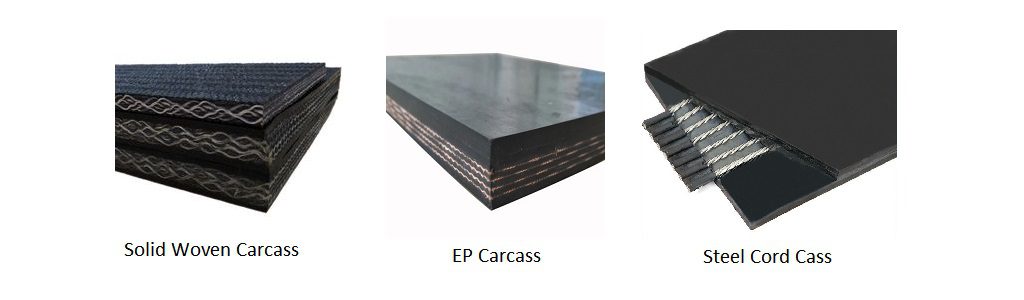
Standard EP (Polyester/Polyamide) fabric carcasses begin to soften, shrink, and lose structural modulus when exposure temperatures exceed 150°C. For severe thermal environments, specific carcass configurations must be selected:
EPR (Polyester/Rayon) Carcasses: Rayon fibers retain dimensional stability and tensile strength at higher temperatures than Nylon (Polyamide) weft fibers, reducing thermal shrinkage and ply distortion.
Glass Fiber / Aramid Breakers: Integrating a woven glass fiber or aramid (Kevlar) heat-barrier breaker ply between the top cover and the main carcass blocks radiant heat penetration and prevents hot material lumps from burning through to the core.
Steel Cord Carcasses: For long-distance or high-tension hot material handling (e.g., long sinter lines in steel plants), steel cord carcasses are immune to thermal shrinkage and retain full structural integrity up to the melting limits of the surrounding rubber.
6.How does top cover rubber thickness affect the heat resistance and lifespan of the belt?
In heat-resistant belt design, the top cover acts as both a physical wear layer and a thermal insulation barrier protecting the load-bearing carcass underneath.
Standard Belts: Typically use a top-to-bottom cover ratio of 4:2 mm or 6:2 mm. Heat-Resistant Belts: Require significantly thicker top covers—typically 8:3 mm, 10:4 mm, or 12:4 mm—depending on material lump size and thermal severity.
A thicker top cover (8 mm ~ 12 mm) increases the thermal gradient (ΔT) across the rubber layer. This ensures that even if the outer surface reaches 200°C, the temperature at the carcass interface remains below the 120°C ~ 140°C critical threshold during a standard loading cycle.
7.How do I choose between Hot Vulcanized, Cold Bonded, and Mechanical Splices for heat-resistant belts?
The splice is the most vulnerable point on a heat-resistant belt because elevated temperatures degrade adhesive bonds faster than parent rubber compounds:
Hot Vulcanized Splices (Mandatory for T2, T3, and T4 Grades): Hot vulcanization using specialized heat-resistant un-vulcanized tie gum and cover stock is the only reliable joint method for high-temperature operations. It creates a seamless, homogenous chemical bond matching the thermal resistance of the main belt loop.
Cold Bonded Splices (Restricted to T1 Grades <100°C): Standard cold-bonding adhesives (two-part polychloroprene/isocyanate cements) vitrify, harden, and lose shear strength rapidly when continuously exposed to temperatures above 100°C ~ 120°C, causing premature joint opening.
Mechanical Fasteners (Not Recommended): Metal fasteners conduct heat directly into the internal fabric plies, causing localized thermal charring and fabric tear-out around the rivet/bolt holes.
8.What conveyor design modifications can extend the operating life of a heat-resistant belt?
Maximizing heat-resistant belt life requires optimizing the surrounding conveyor mechanics to promote thermal dissipation:
Increase Belt Speed (Slightly): Higher belt speeds reduce material contact time per unit area of belt surface, lowering heat absorption per pass.
Extend the Return Strand Length / Open Layout: Allowing the empty belt maximum exposure to ambient air on the return run helps cool the top cover before it re-enters the loading zone.
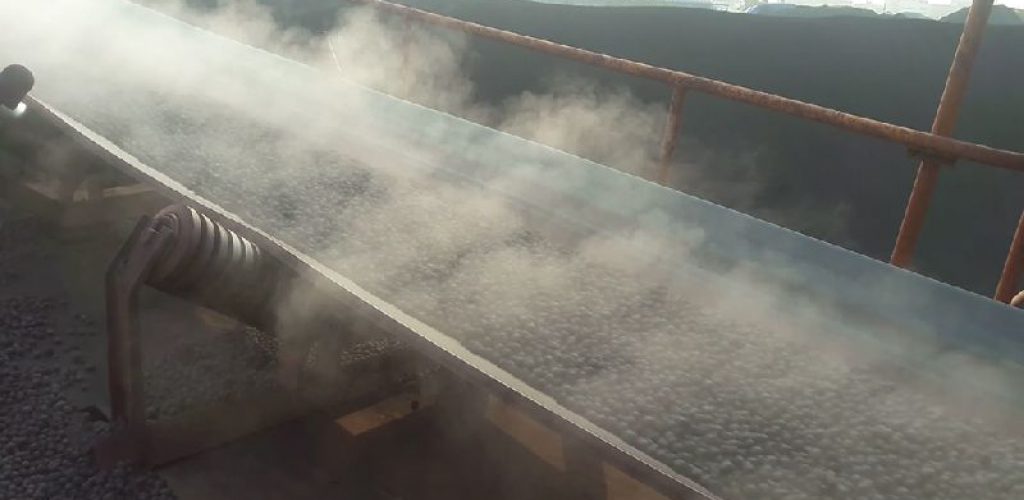
Water Spray Cooling Jets: Installing atomized water spray nozzles along the return strand accelerates evaporative cooling. Caution: Water must fully evaporate before the loading zone; standing water mixed with hot dust creates abrasive slurry.
Increase Pulley Diameters: Because thermal aging hardens the rubber cover, drive and tail pulleys should be sized 15% to 20% larger than standard DIN recommendations to minimize flexural bending stress on embrittled covers.
9.Why does hot material cause severe cover gouging and lump burn-through, and how can it be prevented?
When red-hot lumps, clinker balls, or trapped tramp metal drop onto a conveyor, they exert high kinetic energy combined with intense localized thermal energy (often exceeding 400°C ~ 600°C).
Burn-Through Mechanism: High thermal conduction instantly melts or pyrolyzes the top rubber cover under the lump, allowing the sharp object to sink deep into the carcass and scorch the synthetic plies.
Prevention Strategies: Glass Fiber / Aramid Anti-Burn Breakers: Laying an ultra-high temperature textile breaker under the top cover prevents red-hot lumps from penetrating into the core carcass. Rock Boxes / Grizzly Feeder Chutes: Design loading chutes with grizzly bars to allow fine, cooler material to drop onto the belt first, forming a protective bed before large, hot lumps impact the surface.
10.How should condition monitoring and maintenance be performed on heat-resistant conveyor belts?
Proactive monitoring for heat-resistant belts focuses on surface hardness progression, carcass adhesion tracking, and thermal profiling:
Durometer Hardness Testing (Shore A): Regularly measure top cover hardness using a Shore A durometer. An increase of >15 ~ 20 Shore A points over initial values indicates severe thermo-oxidative cross-linking, signaling that surface cracking and carcass delamination are imminent.
Infrared Thermal Imaging (FLIR Cameras): Scan the carrying strand during operation to identify localized thermal hot spots (e.g., trapped burning clinker) or uneven heat distribution across the belt width.
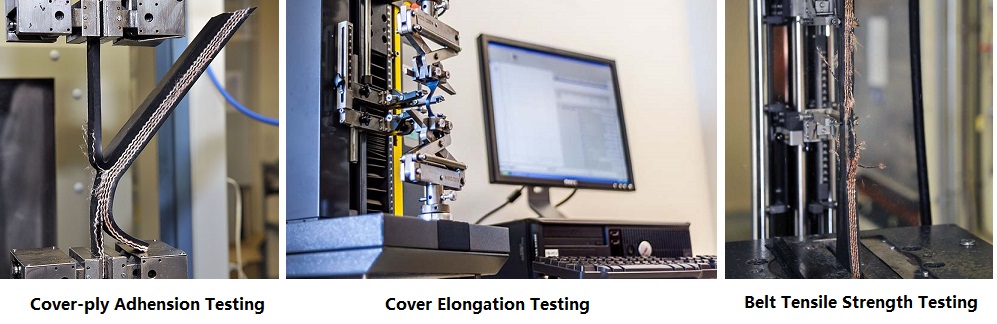
Ultrasonic Thickness & Inter-Ply Peel Inspections: Measure cover thickness reduction and test carcass ply adhesion during scheduled shutdowns to catch inter-ply delamination before full-width carcass failure occurs.
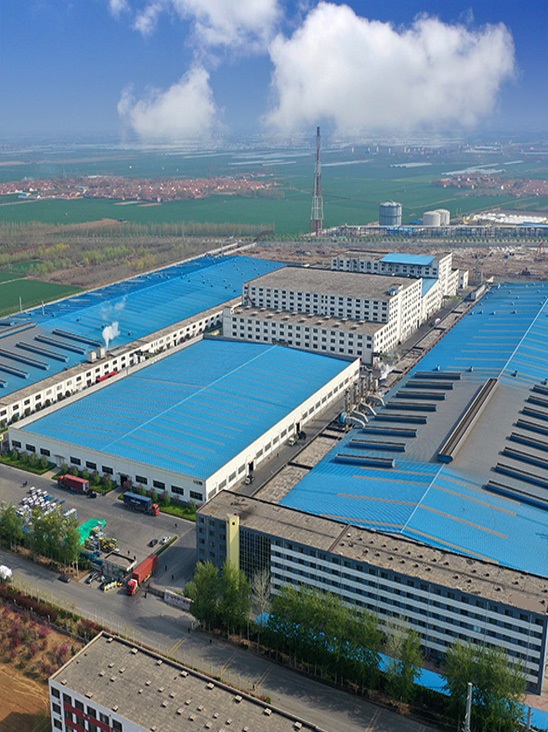
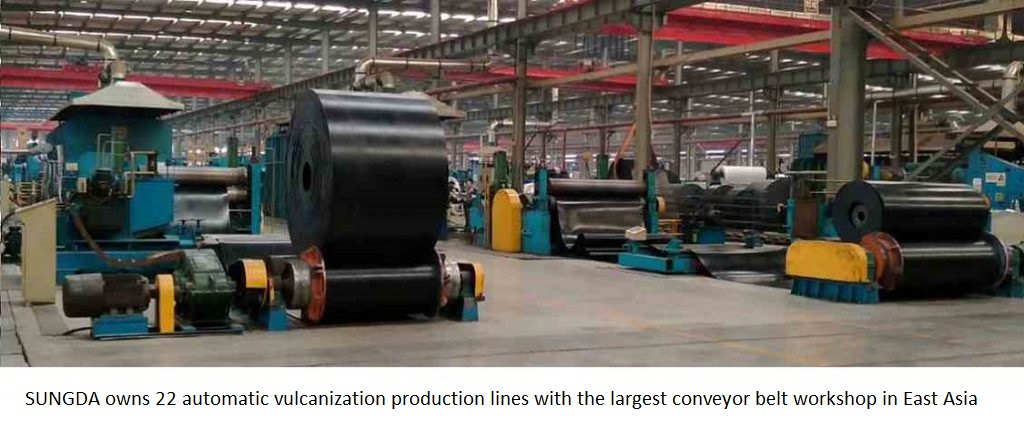
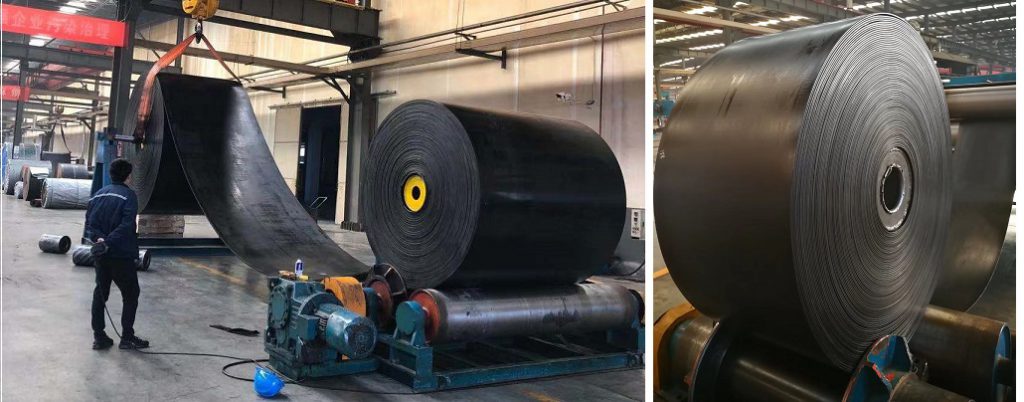
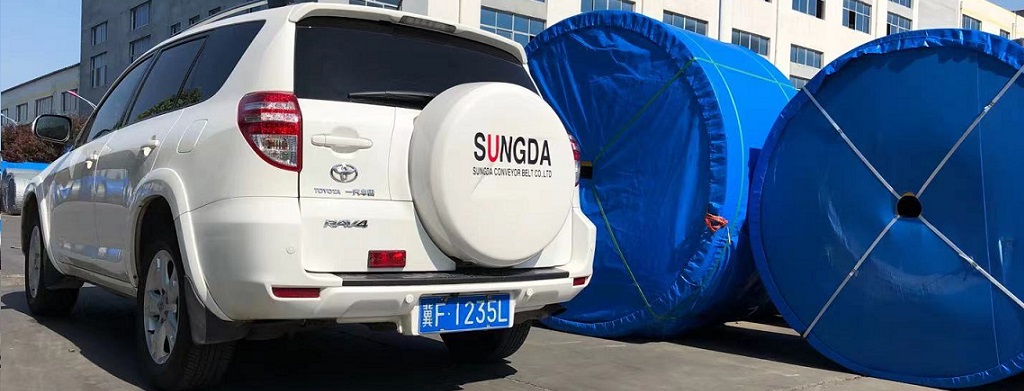
SUNGDA Conveyor Belt Vulcanization Workshops


Tags: Abrasion resistance of heat resistance conveyor belts,anti-static properties of heat resistance conveyor belt,Application of heat resistance conveyor belts in cement production,Application of heat resistance conveyor belts in cooling and high-temperature processes,Application of heat resistance conveyor belts in the coal industry,Application of heat resistance conveyor belts in the metallurgical industry,Application of heat resistance conveyor belts in the power industry,Applications and industries of heat resistance conveyor belts,Buying guide for heat resistance conveyor belts,cement plant,cement plant conveyor belt,Chemical stability of heat resistance conveyor belts,clinker,coke,Comparison of heat resistance conveyor belts with other types,Design and manufacturing standards for heat resistance conveyor belts,dry clay,Fire resistance of heat resistance conveyor belts,foundries,guide,Heat resistant conveyor belt,High-temperature resistance of heat resistance conveyor belts,Installation and commissioning tips for heat resistance conveyor belts,International standards and certifications for heat resistance conveyor belts,Maintenance and care for heat resistance conveyor belts,Materials and construction of heat resistance conveyor belts,Operating temperature range of heat resistance conveyor belts,pellets,Pricing and cost of heat resistance conveyor belts,sintered ore,slag,specification,steel factory belt,steel mill,steel plant belt,Suitable environments and conditions for heat resistance conveyor belts,taconite,Tensile strength of heat resistance conveyor belts,Weather resistance of heat resistance conveyor belts
Related Products
-
Material Composition of High-Quality Conveyor Belts (from ContiTech & Dunlop)
No. -
What Are the Key Properties of T1, T2, T3, T4 Heat-Resistant Conveyor Belts?
No. -
The Most Comprehensive National and Organizational Conveyor Belt Testing Standards
No. -
What is the Difference between Heat-Resistant Conveyor belts and Fire-resistant conveyor belts?
No. -
How to make the heat-resistant conveyor belt can reach the level of 800 °C?
No. -
Several Standards that Must Be Strictly Followed for Heat-resistant Conveyor Belts
No. -
How to Choose The Right Conveyor Belt for Cement Plant?
No. -
The King of High Temperature Resistant conveyor belt— EPDM Conveyor Belt
No. -
How to effectively extend the service life of heat-resistant conveyor belts?
No. -
The characteristics of the carcass material of the heat-resistant conveyor belt
No.